
What Is an MRSA Culture Test? A Clear Guide for Patients
If you have been advised to have an MRSA screening, perhaps for an upcoming hospital procedure, it is perfectly normal to have questions. The medical terminology can feel confusing, and you might be wondering what an MRSA culture test actually involves, whether it’s a complicated process, and what the results will ultimately mean for you. This uncertainty is common, but getting clear, professional information is the first step towards feeling confident and in control of your health.
This guide is designed to provide exactly that. We will walk you through the entire process in simple, easy-to-understand terms. You will learn precisely how a sample is processed in our trusted UK laboratory, how to interpret your results, and how this crucial screening can be completed accurately and discreetly from the comfort of your own home. We will also clarify the key differences between a culture and a PCR test, ensuring you have all the information needed to proceed with your screening with complete peace of mind.
Key Takeaways
- Understand the purpose of an mrsa culture test, the trusted ‘gold standard’ method for accurately detecting MRSA colonisation on the skin.
- Learn how a simple swab sample is processed in a UK-based lab and what a ‘Detected’ or ‘Not Detected’ result means for you.
- Discover the key differences between a culture test and a rapid PCR test to decide which screening option best suits your needs.
- Find out how you can perform a confidential and reliable MRSA test yourself with a simple at-home kit, delivered discreetly to your door.
Understanding the MRSA Culture Test: The Gold Standard for Screening
The MRSA culture test is a laboratory procedure designed to detect the presence of a specific type of bacteria on your skin. In simple terms, a sample, usually from a skin swab, is placed in a special dish to see if bacteria will grow. This highly accurate and trusted method has long been the standard for screening used by the NHS and healthcare providers across the UK.
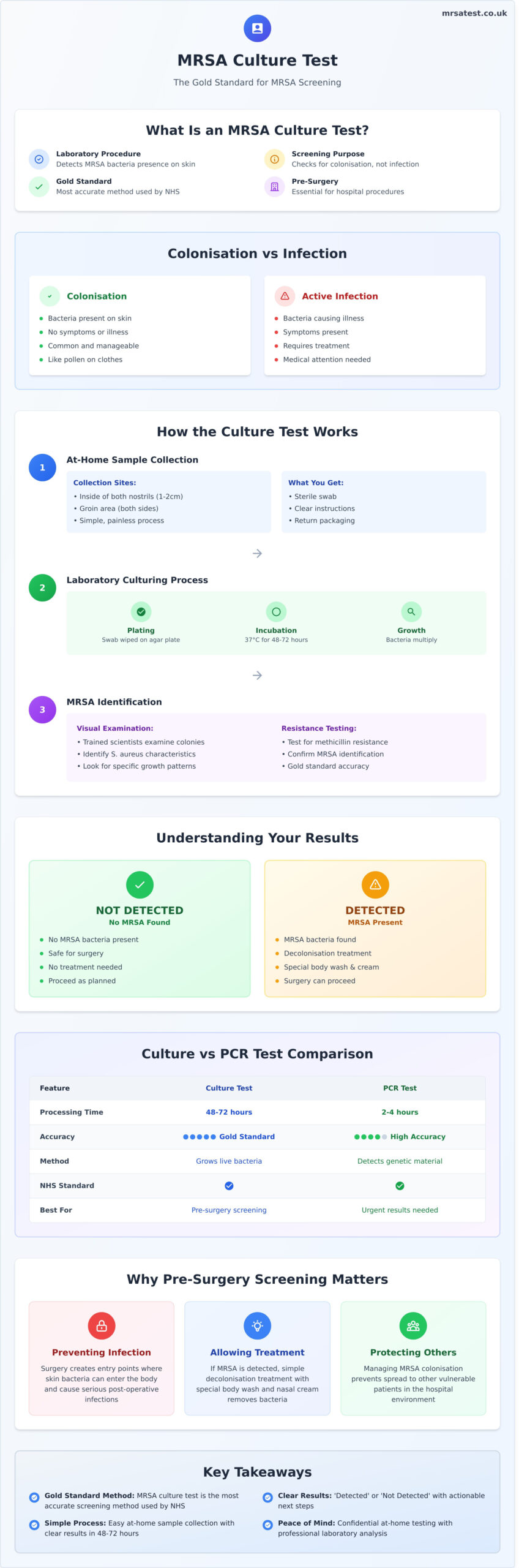
Its primary purpose is not to diagnose an active infection but to check for ‘colonisation’. This is a crucial distinction. The test is typically recommended for individuals preparing for hospital admission, particularly for surgery, or for those who want peace of mind about their MRSA status. Finding MRSA on the skin is a common and manageable situation, not an immediate cause for alarm.
What Does ‘Colonisation’ Mean?
Colonisation simply means that bacteria are living on your skin without causing any illness. Many people carry bacteria like Methicillin-resistant Staphylococcus aureus (MRSA) without any symptoms or harm. Think of it like having pollen on your clothes without suffering from hay fever. The bacteria are present, but they are not causing an infection. The goal of a screening mrsa culture test is to identify this presence as a precautionary measure before a hospital stay.
Why is Pre-Surgery Screening So Important?
Screening for MRSA before an operation is a critical safety step that protects both you and other patients. Hospitals need to know your MRSA status for several key reasons:
- Preventing Infection: During surgery, skin bacteria can enter the body through an incision, potentially causing a serious post-operative infection.
- Allowing for Treatment: If MRSA is detected, a simple decolonisation treatment (such as a special body wash and nasal cream) can be used at home before your procedure to remove the bacteria.
- Protecting Others: Identifying and managing MRSA colonisation helps prevent its spread to other vulnerable patients within the hospital environment.
How a Culture Test Works: From Your Swab to the Laboratory
Understanding the journey of your sample can provide peace of mind. The traditional MRSA culture test is a highly accurate, multi-step process managed by experts. It begins with a simple collection at home and ends with a definitive analysis in a specialist laboratory. Here is a clear, step-by-step overview of how we determine your MRSA status with precision and care.
Step 1: The At-Home Sample Collection
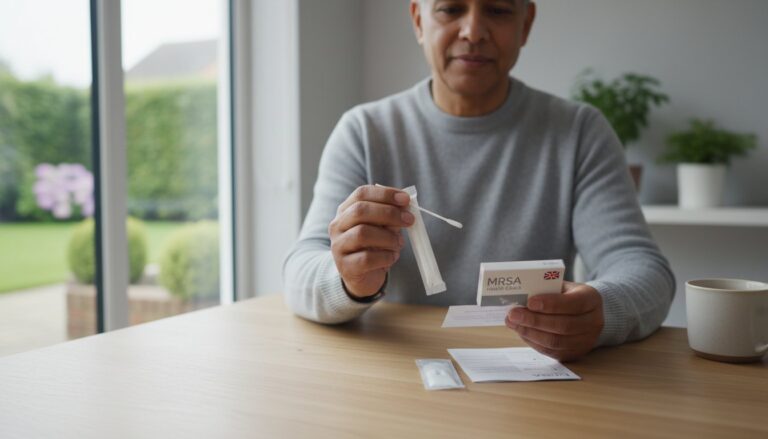
Your test kit contains a sterile swab and simple instructions for a painless collection process. The most common and effective sites for screening are the areas where MRSA bacteria often live without causing harm. You will be asked to gently swab:
- The inside of both nostrils: Simply insert the soft tip of the swab about 1-2 cm into one nostril and rotate it against the inside wall, then repeat in the other nostril with the same swab.
- The groin area: Gently wipe the swab over the skin on both sides of the groin crease.
Following the included instructions carefully is crucial for ensuring the laboratory receives a viable sample for testing.
Step 2: The Laboratory Culturing Process
Once you post your sample, it arrives at our 100% UK-based, UKAS-accredited partner laboratory. Here, a trained microbiologist takes the swab and gently wipes it onto a special nutrient-rich substance in a petri dish, known as an agar plate. This process is called ‘plating’. The plate is then placed in an incubator, a machine that keeps it at a warm, consistent temperature (around 37°C) for 48 to 72 hours. This provides the perfect conditions for any bacteria present on the swab to multiply and grow into visible colonies.
Step 3: Identifying the MRSA Bacteria
After incubation, our scientists examine the plate for bacterial growth. They are trained to visually identify the specific colonies characteristic of Staphylococcus aureus. If these colonies are present, a final confirmation is required. Technicians test the bacteria from these colonies to see if they are resistant to methicillin and other related antibiotics. This meticulous identification process is the gold standard for a definitive MRSA culture test. Only if the bacteria are identified as S. aureus AND show resistance to methicillin is the result confirmed as positive for MRSA.
Interpreting Your MRSA Culture Test Results
Once our UKAS-accredited partner laboratory has completed the analysis, you will receive your results confidentially via a secure digital report. We ensure the information is presented in a clear, straightforward manner, free from confusing jargon. The outcome of your mrsa culture test will be one of two simple results: Negative (Not Detected) or Positive (Detected). Understanding what each result means and the appropriate next steps is crucial for managing your health, especially before a hospital procedure.
Remember, the purpose of this screening is to provide you and your healthcare team with vital information. A positive result is not a diagnosis of illness but a key indicator that allows for simple, preventative measures to be taken.
What a ‘Negative’ (Not Detected) Result Means
This is the most common and desired outcome, particularly for pre-operative screening. A negative result provides peace of mind and confirms that no MRSA bacteria were grown from the samples you provided. This indicates you are not carrying MRSA at the sites swabbed. You can confidently share this official laboratory report with your hospital, surgical team, or GP as required, allowing your planned procedure to go ahead without the need for decolonisation treatment.
What a ‘Positive’ (Detected) Result Means
A positive result means that the MRSA bacteria were found on your skin at the swabbed sites. This does not mean you are ill; it indicates that you are ‘colonised’ with MRSA, where the bacteria live harmlessly on your skin. This is a common finding, and it is important not to be alarmed. Understanding the nuances of different MRSA Tests and what colonisation means is the first step in managing the result effectively.
If you receive a positive result, you must take the following steps:
- Inform your GP or hospital immediately. Provide them with a copy of your test result.
- Follow medical advice. Your healthcare provider will likely prescribe a simple and short decolonisation treatment. This typically involves using an antiseptic body wash and a nasal ointment for several days to remove the bacteria from your skin before your hospital admission.
This proactive treatment is a routine safety measure designed to significantly reduce the risk of developing an infection after your surgery. The information from your mrsa culture test empowers your medical team to provide the safest possible care.
MRSA Culture vs. PCR Test: Which One is Right for You?
When preparing for a hospital admission or surgery, you may be asked to screen for MRSA. At mrsatest.co.uk, we offer two highly accurate, confidential testing methods: the traditional culture test and the modern PCR rapid test. Understanding the key differences will help you choose the right option for your specific situation.
The fundamental difference lies in their method. A mrsa culture test works by taking your sample and placing it in a special medium to see if MRSA bacteria will grow. In contrast, a PCR (Polymerase Chain Reaction) test is a molecular technique that looks directly for MRSA’s genetic material (DNA), offering a much faster result.
To help you decide, here is a simple side-by-side comparison of the two tests available for you to use from the comfort of your home.
Comparison: Speed and Turnaround Time
The most significant difference for patients is speed. A culture test requires time for bacteria to grow to detectable levels, meaning results are typically ready in 48-72 hours after our UKAS-accredited lab receives your sample. The PCR test, however, provides a clear result in just 24 hours. If your surgery is imminent and you need confirmation quickly, the PCR test is the superior choice.
Comparison: Cost and Method
The traditional mrsa culture test has long been the ‘gold standard’ in diagnostics for its reliability and accuracy. As a well-established method, it is the more affordable and cost-effective option for routine screening. The PCR test is a premium service due to the advanced molecular technology and equipment required to analyse the genetic material, making it ideal for those who prioritise speed.
Our Recommendation
For standard pre-operative screening where you have sufficient time, the culture test is an excellent, reliable, and economical choice. It provides the accurate results your hospital needs. However, for urgent screening requirements, such as a last-minute procedure or a time-sensitive admission, the PCR test delivers the necessary speed and peace of mind.
To find the solution that fits your timeline and budget, you can view both our MRSA Culture and PCR test options.
How to Take an MRSA Culture Test From Home
Taking control of your health screening is now simpler and more discreet than ever. Our at-home MRSA culture test kit is designed to provide you with a reliable, clinical-grade result without the need to visit a GP or clinic. The entire process is managed from the comfort of your own home, following a simple, confidential, and efficient four-step process.
Step 1: Order Your Kit Online
Begin by placing your order securely through our website. We understand the importance of privacy, which why we dispatch your test kit quickly in plain, unmarked packaging. Inside the box, you will find everything you need to complete your test:
- Sterile collection swabs
- Clear, easy-to-follow instructions
- Secure return packaging and a bio-safe bag
This all-in-one solution eliminates the wait for appointments and provides a convenient way to test on your own schedule.
Steps 2 & 3: Collect and Post Your Sample
Collecting your sample is a straightforward process that takes only a few minutes. Our kit includes simple, illustrated instructions to guide you through swabbing the correct areas for an accurate result. Once collected, place the sample into the secure packaging provided. Then, attach the included Royal Mail Tracked 24 return label and post the package back to our laboratory from any post box. Postage is prepaid and tracked for your complete peace of mind.
Step 4: Receive Your Confidential Results
Your sample is processed at our fully UKAS-accredited partner laboratory, ensuring the highest clinical standards. Once our lab completes the analysis of your MRSA culture test, typically within 48-72 hours of receiving the sample, we will notify you by email. You can then log in to our secure online portal to view your confidential results. Should you have any questions about your report, our dedicated team is available to provide support and clarity.
This streamlined process puts you in control, combining clinical accuracy with unparalleled convenience. Ready to get the clear answers you need? Order your confidential MRSA test kit today.
Your Next Step: Accurate and Discreet MRSA Testing
Understanding MRSA screening is the first step toward peace of mind. As we’ve explored, the mrsa culture test remains the gold standard for accurately detecting MRSA colonisation. From the simple swab collection to interpreting your results, the process is designed to be clear and straightforward, empowering you with vital information about your health.
If you require screening for an upcoming procedure or simply want certainty, you can take control from the comfort of your home. Our at-home test kits provide a simple, discreet, and reliable solution. Every sample is processed in a UKAS-accredited UK laboratory, with clear, confidential results delivered in just 48-72 hours. With free, discreet Royal Mail Tracked 24 shipping and returns, getting the answers you need has never been easier.
Order Your Confidential MRSA Culture Test Kit Today and take a proactive step for your health and well-being.
Frequently Asked Questions
How accurate is an at-home MRSA culture test?
Our at-home MRSA culture test is highly accurate and reliable. The sample collection kit uses the same medical-grade swabs and processes used in NHS hospitals and private clinics. Once you collect your sample, it is processed at our fully UKAS-accredited UK laboratory, ensuring it meets the highest clinical standards. This method is considered the gold standard for detecting MRSA colonisation, providing you with a result you can trust completely.
Is the swabbing process for an MRSA test painful?
No, the swabbing process is not painful. It is a simple, non-invasive procedure designed to be completed easily from the comfort of your own home. You may feel a slight tickle or an unusual sensation when swabbing the inside of your nostril, but the process is quick and should not cause any discomfort. The soft-tipped swab is designed for gentle and effective sample collection, ensuring a pain-free experience.
What should I do if my MRSA culture test is positive?
A positive result simply means that MRSA bacteria have been detected on your skin; it does not mean you have an active infection. There is no need for alarm. The most important step is to share your confidential results with your GP or the surgical team managing your care. They will advise you on the next steps, which typically involve a straightforward decolonisation treatment to clear the bacteria before a hospital admission.
Why do I need to swab both my nose and groin for the test?
MRSA bacteria commonly live in warm, moist areas of the body without causing any harm. The nostrils and the groin are two of the most common sites for this colonisation. By taking samples from both of these key areas, we significantly increase the accuracy of the test. This comprehensive approach ensures we get the most reliable picture, minimising the chance of a false negative and providing you with greater peace of mind.
Can I still have surgery if my MRSA test is positive?
In most cases, yes. A positive MRSA screening result does not typically lead to the cancellation of surgery. Instead, it allows your healthcare team to take proactive steps to protect your health. Your procedure may be postponed for a short period while you undergo a simple decolonisation treatment, which usually involves a special body wash and nasal cream. This is a standard safety precaution to significantly reduce the risk of post-operative infection.
How long do I have to return my sample to the lab after collection?
For the most accurate results, you should post your sample back to our laboratory on the same day you collect it. Timeliness is important to ensure the viability of the sample for culturing. Your kit includes a pre-paid Royal Mail Tracked 24 return envelope for a fast and convenient return. Simply collect your sample in the morning and post it in any Royal Mail priority postbox before the last collection time.