

What Does a CA125 Blood Test Show? A Clear Guide
If your doctor has recommended a ca125 blood test, it’s completely understandable to feel a sense of uncertainty or concern. Hearing terms like ‘tumour marker’ can be alarming, and the wait for results often brings more questions than answers. Whether you’re investigating symptoms like persistent bloating or have been advised to have the test for another reason, navigating the information alone can feel overwhelming.
This guide is here to provide clear, calm, and accurate answers. We will walk you through what the CA125 protein is, why this test is used, and what a ‘normal’ or ‘elevated’ result might indicate. Crucially, we’ll also discuss the many benign (non-cancerous) conditions that can affect your results. Our goal is to demystify the process, reduce anxiety, and empower you with the knowledge you need for a confident conversation with your healthcare provider.
What is a CA125 Blood Test and What Does It Measure?
A ca125 blood test is a straightforward medical test used to measure the amount of a specific protein, known as Cancer Antigen 125 (CA-125), in your bloodstream. While the word ‘cancer’ in its name can be concerning, it is important to understand that this protein is produced by various normal cells in the body, not exclusively by cancerous ones. Its presence alone is not a diagnosis of cancer; it is simply an indicator that may require further attention.
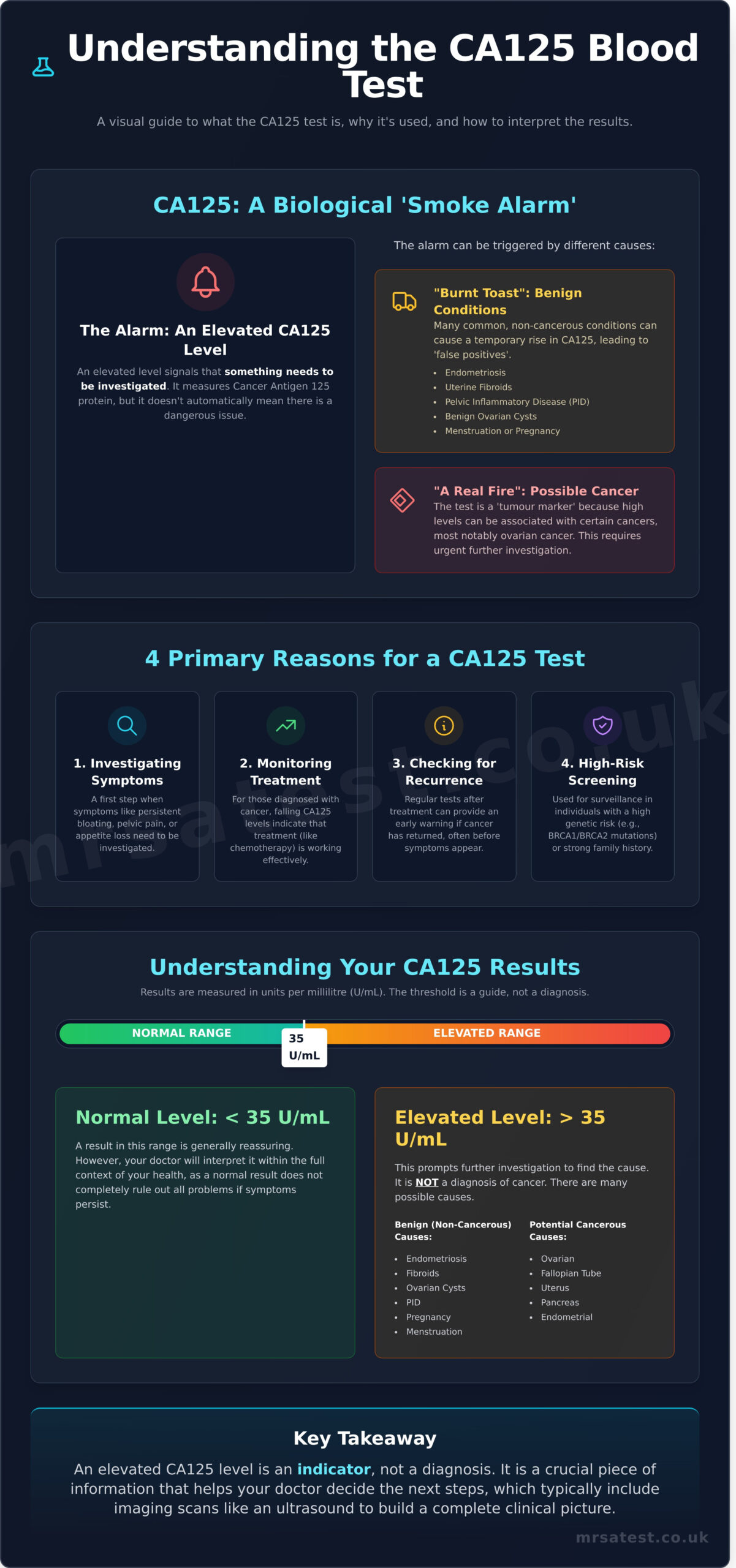
To understand its role, it helps to use an analogy. Think of a CA-125 level as a biological ‘smoke alarm.’ A smoke alarm is designed to alert you to the possibility of a fire, but it can also be triggered by something as harmless as burnt toast. The alarm signals that something needs to be investigated, but it doesn’t automatically mean there is a dangerous fire. Similarly, an elevated CA-125 level prompts your doctor to look closer, but it is not definitive proof of a serious condition.
CA-125 as a Tumour Marker
CA-125 is classified as a ‘tumour marker’. This means it is a substance that can sometimes be found in higher-than-normal amounts in the blood, tissue, or other body fluids of some people with certain types of cancer. The CA-125 protein is primarily associated with ovarian cancer, as cancer cells on the surface of the ovaries can release it into the bloodstream, causing levels to rise. However, it is crucial to remember that this test provides an indication, not a diagnosis. It simply offers one piece of information for your healthcare provider to consider.
Why It’s Not a Standalone Screening Tool
For this reason, the ca125 blood test is not used as a general screening tool for asymptomatic women in the UK. Many common, non-cancerous conditions can cause a temporary rise in CA-125 levels, leading to ‘false positives’. These conditions include:
- Endometriosis
- Uterine fibroids
- Pelvic inflammatory disease (PID)
- Benign ovarian cysts
- Even menstruation or pregnancy
These false positives can cause significant and unnecessary anxiety. Therefore, doctors interpret the results as one part of a larger diagnostic puzzle, combining them with your symptoms, a physical examination, and imaging scans (like an ultrasound) to build an accurate clinical picture.
Why Is a CA125 Test Performed? Common Reasons Explained
A doctor may recommend a CA-125 test for several distinct reasons, which fall into two main categories: investigating unexplained symptoms and monitoring a known condition. Understanding the specific purpose of your test is a crucial step in managing your health. The test measures the amount of cancer antigen 125 in your blood, but it’s important to remember it is a tumour marker, not a definitive diagnosis on its own.
Here are the four primary scenarios where a ca125 blood test is used in UK clinical practice.
Investigating Symptoms of Ovarian Cancer
This is often a first step if you present to your GP with persistent symptoms that could be linked to ovarian cancer. While these symptoms can be vague and are frequently caused by less serious conditions, a doctor will investigate them thoroughly to rule out any concerns. The CA 125 test helps your doctor build a clearer clinical picture. Key symptoms include:
- Persistent bloating that does not resolve
- Pain or tenderness in your pelvis or abdomen
- Feeling full quickly or loss of appetite
- Needing to urinate more frequently or urgently than usual
It is reassuring to know that many non-cancerous conditions can also raise CA-125 levels, so an elevated result requires further investigation.
Monitoring Cancer Treatment
For individuals diagnosed with certain cancers, particularly ovarian cancer, the CA-125 test is an invaluable tool for tracking the effectiveness of treatment, such as chemotherapy. Your clinical team will take a baseline measurement before therapy begins. A consistent decrease in your CA-125 levels is a positive indicator that the treatment is successfully destroying cancer cells. Conversely, if levels remain high or begin to rise, it may prompt your oncologist to reassess the treatment plan.
Checking for Cancer Recurrence
After completing a successful course of treatment, you will enter a period of follow-up care, often called surveillance. Regular CA-125 tests, typically performed every few months, are a key part of this monitoring process. A rising CA-125 level can be one of the earliest signs that the cancer may have returned, often appearing before any physical symptoms develop. This early detection allows your medical team to intervene quickly with further tests or treatment.
Screening for High-Risk Individuals
The CA-125 test is not recommended as a general screening tool for the wider population. However, it may be used for surveillance in individuals with a significantly higher genetic risk of developing ovarian cancer. This high-risk group includes those with known gene mutations (like BRCA1 or BRCA2) or a very strong family history of ovarian or breast cancer. In these specialist cases, the test is typically performed alongside a transvaginal ultrasound and is guided by a consultant or genetic counsellor.
Understanding Your CA125 Test Results: Normal vs. High Levels
Receiving the results of any medical test can be a source of anxiety. It is important to remember that the number on your report is just one piece of a larger puzzle. Your GP or specialist is trained to interpret this information within the full context of your health, symptoms, and medical history. This section is designed to help you understand what the numbers mean in a clear and balanced way.
What is a Normal CA125 Level?
For most women, a normal CA125 level is considered to be under 35 units per millilitre (U/mL). However, it is crucial to recognise that reference ranges can vary slightly from one laboratory to another. A result within the normal range is reassuring, but it must be interpreted by a healthcare professional. A doctor will always consider your result alongside your clinical symptoms to build a complete picture of your health.
Elevated CA125 and Its Link to Cancer
A result above 35 U/mL is considered elevated and typically prompts further investigation to determine the cause. While a high reading is most commonly associated with ovarian cancer, it can also be an indicator for other cancers, such as those of the fallopian tube, uterus, or pancreas. It is vital to understand that an elevated result is not a diagnosis of cancer. The CA-125 blood test is a valuable indicator, but it is not definitive on its own and requires follow-up tests, like an ultrasound, to clarify the finding.
Common Benign Conditions That Can Raise CA125 Levels
One of the most important facts about the ca125 blood test is that many common, non-cancerous (benign) conditions can cause a temporary or persistent rise in levels. This is a primary reason why a high result does not automatically mean cancer. Understanding these possibilities can help manage anxiety while you await further consultation.
Benign conditions that can increase CA125 include:
- Endometriosis: A condition where tissue similar to the lining of the womb grows in other places, such as the ovaries and fallopian tubes.
- Uterine Fibroids: Non-cancerous growths that develop in or around the womb (uterus).
- Pelvic Inflammatory Disease (PID): An infection of the female upper genital tract, including the womb, fallopian tubes, and ovaries.
- Menstruation: CA125 levels can naturally fluctuate and rise during your period.
- Pregnancy: Levels are often elevated, especially during the first trimester.
- Liver Disease: Certain conditions affecting the liver, such as cirrhosis, can also raise CA125.
Your doctor will carefully consider these and other factors when evaluating your results to provide an accurate assessment and recommend the right next steps for your care.
What to Expect: The CA125 Test Process from Start to Finish
Understanding the patient journey for a ca125 blood test can help reduce any anxiety you may feel. The process is straightforward and is a very common diagnostic step performed thousands of times a day across the UK. This guide walks you through what happens from the moment your doctor recommends the test to receiving your results, ensuring you feel informed and prepared.
Before the Test: Preparation and Questions
One of the most common concerns is about preparation, but the good news is that no special measures like fasting are typically required. You can eat and drink as normal before your appointment. It is, however, very important to let your doctor know where you are in your menstrual cycle or if you are post-menopausal. This information is crucial for interpreting the results accurately, as CA125 levels can fluctuate naturally with your cycle.
To feel fully in control of the process, consider asking your GP a few questions:
- Why are you recommending this test for my specific situation?
- What other non-cancerous conditions or factors could influence my CA125 level?
- When and how should I expect to receive and discuss my results?
During the Blood Draw
The blood draw itself is a simple and quick procedure, usually performed by a nurse or a phlebotomist at your GP surgery or a local clinic. The entire process typically takes less than five minutes. A tight band (tourniquet) will be placed around your upper arm to make the vein easier to find. The area is then cleaned with an antiseptic wipe before a small, sterile needle is used to draw a sample of blood into a vial.
You may feel a slight scratch as the needle goes in, but any discomfort is very brief. Afterwards, a small plaster or cotton wool will be applied to the site. It is common to experience minor bruising or tenderness, but this should fade within a day or two.
After the Test: Getting Your Results
Once your sample is sent to the laboratory for analysis, you can typically expect the results to be returned to your doctor within a few working days. The exact timing can vary depending on your local NHS trust or private provider.
Your results will not be sent directly to you. Instead, your GP will contact you to arrange a follow-up appointment, either in person or over the phone, to discuss the findings in their full context. It is essential to wait for this consultation. A single number from the test means very little without your doctor’s professional interpretation, so try to avoid drawing any conclusions until you have spoken with them.
Next Steps: What Happens After a High CA125 Result?
Receiving an elevated result from a ca125 blood test can be worrying, but it is important to understand that this is not a diagnosis. Instead, it serves as a crucial indicator that prompts your healthcare provider to begin a structured diagnostic process. There is a clear and established pathway in the UK to investigate the cause of the high reading, ensuring you receive thorough and expert care.
The Importance of Follow-Up Tests
Think of a high CA125 level as a trigger, not a conclusion. Because this protein can be elevated for many benign reasons, the test result alone is not enough to determine the cause. Your doctor will use this information to guide the next steps, which almost always involve imaging tests to get a direct look at your pelvic organs.
Common Imaging Scans
The most common first-line imaging test is a transvaginal ultrasound. This is a simple and safe procedure where a small, specialised ultrasound probe is gently inserted into the vagina. It provides a much clearer and more detailed view of the ovaries, uterus, and fallopian tubes than an external ultrasound. Your doctor will be looking for any cysts, tumours, or other abnormalities. Depending on these findings, you may be referred for further imaging, such as a CT or MRI scan, to gather more detailed information.
Consulting with a Specialist
Following your initial tests, a referral to a specialist-typically a gynaecologist or a gynaecological oncologist-is a standard and important step. This ensures that your results are interpreted by an expert who can formulate the most appropriate plan. This referral is a precautionary measure to provide you with the highest level of care.
To feel more in control, consider preparing some questions for your appointment:
- What do my ca125 blood test and scan results mean when considered together?
- What are the next diagnostic steps, if any are needed?
- Based on what you see, what are the possible causes?
Your Health in Focus: Final Thoughts on the CA125 Test
Navigating medical tests can be a source of anxiety, but understanding the process is a powerful step towards feeling in control. This guide was created to demystify the ca125 blood test, clarifying what it measures, why it’s performed, and what the results can indicate. The key takeaway is that while this test is a valuable tool, it is not a standalone diagnostic answer. Elevated CA125 levels can be linked to various conditions, both cancerous and benign, making a professional medical interpretation essential.
This guide, reviewed for clarity and accuracy, is designed to help you have more informed medical conversations. The most important action you can take is to always discuss your test results and health concerns with your GP or a qualified healthcare professional. They can provide context, recommend further steps, and create a personalised care plan based on your complete medical profile.
Feeling informed is the first step to feeling empowered. By understanding your health better, you are taking a proactive and positive role in your own care.
Frequently Asked Questions
Can stress or diet affect my CA125 levels?
Currently, there is no strong scientific evidence to suggest that everyday stress or diet directly causes a significant change in your CA125 levels. This marker is more commonly elevated due to inflammation or tissue changes. Conditions such as endometriosis, pelvic inflammatory disease, or even menstruation can cause a temporary rise. Therefore, while a healthy lifestyle is always recommended for overall well-being, it is not considered a direct factor in altering your CA125 test results.
How accurate is the CA125 blood test for detecting ovarian cancer?
The ca125 blood test is not a definitive screening tool for ovarian cancer on its own, as many non-cancerous conditions can raise CA125 levels. Its accuracy improves significantly when used for post-menopausal women with symptoms, or in combination with other tests like an ultrasound scan. For monitoring the effectiveness of ovarian cancer treatment, it is considered a very useful and reliable marker. Your GP or specialist will interpret the results in the context of your overall health.
Do I need to stop any medications before taking the test?
In most cases, you do not need to stop taking your regular medications before a CA125 test. However, it is crucial to inform your doctor or the healthcare professional administering the test about all medications you are currently taking, including prescriptions, over-the-counter drugs, and any supplements. They will provide specific instructions if any adjustments are necessary for your situation to ensure an accurate result. Always follow the advice given by your healthcare provider.
What’s the difference between a CA125 test and a smear test (pap test)?
A CA125 test and a smear test (cervical screening) are two very different procedures that check for different conditions. The CA125 test is a blood test that measures the level of a protein often associated with ovarian cancer. In contrast, a smear test involves collecting a small sample of cells from the cervix to screen for the human papillomavirus (HPV) and abnormal cells that could lead to cervical cancer. They are not interchangeable tests.
Can men have a CA125 test?
Yes, men can have a CA125 test. While Cancer Antigen 125 is most commonly associated with the ovaries, the protein can be produced by other tissues in both men and women. In men, elevated CA125 levels may be investigated in relation to other conditions, including certain cancers such as pancreatic or lung cancer, or non-cancerous issues like liver disease. However, it is not a routine test for men and is used only in specific diagnostic circumstances.
Is it possible to have ovarian cancer with a normal CA125 level?
Yes, it is possible to have ovarian cancer even with a normal CA125 level. Not all ovarian tumours produce this protein, meaning the ca125 blood test will not show an elevated result in every case. This is particularly true for some types of ovarian cancer and in the very early stages of the disease. For this reason, doctors rely on a combination of symptoms, physical examinations, imaging scans, and other tests to form a complete diagnostic picture.