
Understanding Blood Tests: A Simple Guide for Patients
Being told you need a blood test can often bring a wave of uncertainty. For many, the thought of a needle, confusion over whether to fast, and the anxiety of waiting for results can be daunting. When the report finally arrives, it can feel like trying to read a different language, leaving you with more questions than answers. This experience is common, but understanding the process is the first step towards feeling calm and in control.
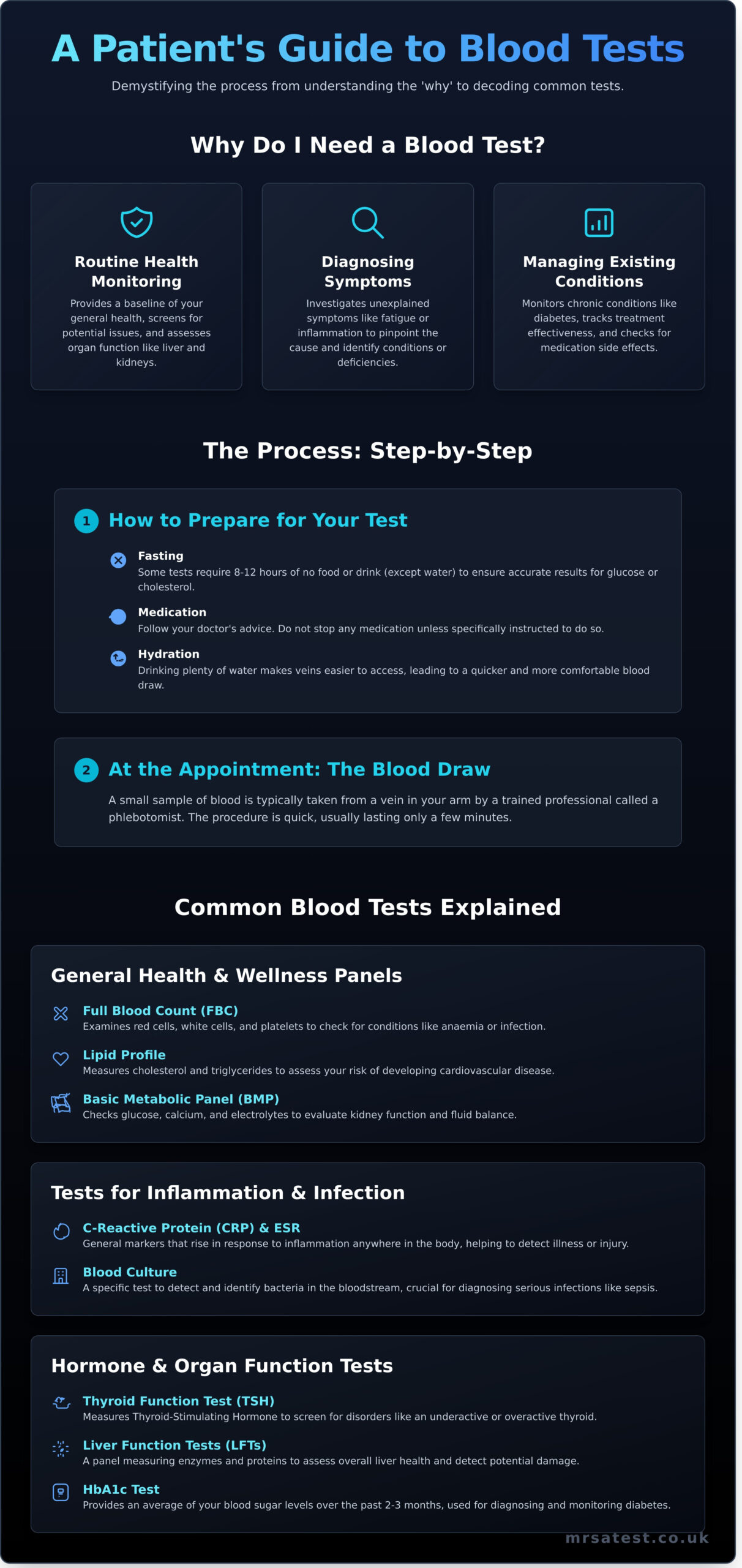
This simple guide is designed to provide clarity and reassurance. We will walk you through every stage of the journey, from booking your appointment and preparing correctly, to what happens during the test itself. We’ll explain the purpose of common tests ordered by your GP, such as a Full Blood Count (FBC) or liver function tests, and what happens to your sample at a trusted, UK-based laboratory.
Our goal is to demystify the medical terms on your report, helping you understand what the key markers mean. By the end of this article, you will feel better prepared for your next blood test and equipped with the knowledge to have a more confident, informed conversation with your doctor about your health.
What is a Blood Test and Why Do I Need One?
A blood test is one of the most common and powerful diagnostic tools used in modern medicine. By taking a small sample of your blood, healthcare professionals can perform a laboratory analysis that provides a detailed snapshot of your overall health. This simple procedure, of which Wikipedia provides a comprehensive overview of blood tests, measures the levels of various substances, cells, and chemicals in your blood. The results help your doctor assess how well your body is working and can reveal vital clues about your health status.
Understanding why your GP has requested a blood test can help demystify the process. It is a routine and essential part of proactive health management, typically requested for one of three main reasons.
Routine Health Monitoring
As part of a regular check-up or an NHS Health Check, a blood test provides a baseline for your general health. It is used to proactively screen for potential issues before they become serious. This includes:
- Assessing the function of key organs like the liver, kidneys, and thyroid.
- Screening for risk factors for common conditions, such as high cholesterol for heart disease or high glucose for diabetes.
- Checking your overall nutritional status.
Diagnosing Symptoms
If you are experiencing unexplained symptoms, such as persistent fatigue, inflammation, or unexpected weight loss, a blood test is a crucial first step in the investigation. It helps your doctor pinpoint the underlying cause by identifying specific markers. This can confirm or rule out a potential medical condition, identify infections, or detect nutritional deficiencies like iron-deficiency anaemia.
Managing Existing Conditions
For individuals with a chronic condition like diabetes or kidney disease, regular blood tests are essential for effective management. These tests allow your medical team to monitor the progression of a condition, check if medication or treatment is working as intended, and ensure that your treatment is not causing any unwanted side effects on other parts of your body.
Common Types of Blood Tests Explained
A single blood sample can provide a wealth of information about your health. To make analysis efficient, doctors often order a ‘panel’, which is a group of tests that assess a specific area of your health. This approach allows for a comprehensive overview from one routine blood test. Below, we outline some of the most common panels and individual tests you may encounter.
General Health & Wellness Panels
These panels are frequently used in routine health screenings to provide a broad picture of your well-being. They act as a baseline, helping to identify potential issues before they become serious. These foundational tests, which you can learn more about in this guide on Common blood tests explained from the National Heart, Lung, and Blood Institute, provide a vital snapshot of your health.
- Full Blood Count (FBC): Examines the different types and numbers of cells in your blood, including red cells, white cells, and platelets, to check for conditions like anaemia or infection.
- Lipid Profile: Measures levels of cholesterol and triglycerides to help assess your risk of developing cardiovascular disease.
- Basic Metabolic Panel (BMP): Checks levels of glucose, calcium, and electrolytes to evaluate kidney function, blood sugar, and your body’s fluid balance.
Tests for Inflammation and Infection
When your body is fighting an illness or injury, certain markers in your blood can change. These tests help your doctor detect and monitor inflammation or identify the presence of a specific infection.
- C-Reactive Protein (CRP): A general marker that rises in response to inflammation somewhere in the body.
- Erythrocyte Sedimentation Rate (ESR): Another non-specific test that measures how quickly red blood cells settle, which can also indicate inflammation.
- Blood Culture: A specific test used to detect and identify bacteria in the bloodstream, which is crucial for diagnosing serious infections like sepsis.
Hormone and Organ Function Tests
This category includes targeted tests designed to assess how well specific organs or glands are working. They are essential for diagnosing and managing a wide range of chronic conditions.
- Thyroid Function Test (TSH): Measures Thyroid-Stimulating Hormone to screen for and diagnose thyroid disorders like an underactive or overactive thyroid.
- Liver Function Tests (LFTs): A panel of tests that measure enzymes and proteins produced by the liver to assess its overall health and detect damage.
- HbA1c Test: Provides an average of your blood sugar levels over the past two to three months, primarily used for diagnosing and monitoring diabetes.
The Blood Test Process: What to Expect Step-by-Step
For many, the thought of a medical test can cause some anxiety. Knowing exactly what will happen, from the moment you prepare at home to the steps after the sample is taken, can make the experience feel much more manageable. This step-by-step guide is designed to demystify the process, providing clear and reassuring information so you can feel confident and prepared for your blood test.
How to Prepare for Your Test
Proper preparation is key to ensuring your results are accurate. Your doctor or clinic will provide specific instructions, but here are some common guidelines:
- Fasting: Some tests, like those for glucose or cholesterol, require you to fast for 8-12 hours. This means consuming no food or drink, except for water. This ensures that nutrients from recent meals do not affect the results.
- Medication: Always follow your doctor’s advice regarding your regular medications. You may be asked to temporarily stop certain drugs, but never do so without specific medical guidance.
- Hydration: Staying well-hydrated by drinking plenty of water can make your veins more accessible, which often leads to a quicker and more comfortable blood draw.
At the Appointment: The Blood Draw
The blood sample is taken by a phlebotomist, a healthcare professional specifically trained in this procedure. The process is usually very quick. First, they will apply a tourniquet to your upper arm to make the vein more visible. The area will then be cleaned with an antiseptic wipe. You will feel a small, sharp scratch as the needle is inserted, but this sensation lasts only for a moment. If you are nervous, try taking slow, deep breaths or looking away. The phlebotomist is there to help, so don’t hesitate to let them know how you are feeling.
After the Test
Once the required samples are collected, the needle is removed, and a small dressing is applied. Your sample is carefully labelled and sent to a certified UKAS-accredited laboratory for analysis. The time it takes to receive your results can vary from a couple of days to over a week, depending on the complexity of the analysis. While you wait, you may find it helpful to review this guide from MedlinePlus on how to understand your lab results. It is common to have a small bruise at the site of the draw; applying gentle pressure after the test can help minimise this.
How to Read Your Blood Test Results Report
Receiving your results can feel daunting. The page is often filled with names, numbers, and abbreviations that are not immediately clear. This section is designed to help you understand the standard layout of a blood test report, empowering you for a more productive conversation with your doctor.
It is essential to remember that this guide provides a general overview. Your results must always be interpreted by a qualified healthcare professional, such as your GP, who can consider them in the full context of your health, lifestyle, and medical history.
Test Name Result Flag Units Reference Range
————————————————————
HAEMOGLOBIN 115 L g/L 120 – 160
WHITE CELL COUNT 7.2 x10^9/L 4.0 – 11.0
Key Terms on Your Report
Most reports are structured as a table with several key columns. Understanding these terms is the first step to making sense of the data:
- Test Name: This identifies what specific substance or cell type was measured in your blood sample. Examples include ‘Haemoglobin’ or ‘Serum Cholesterol’.
- Result: This is the actual measurement obtained from your sample. It is a specific numerical value.
- Units: This column shows the unit of measurement used, such as mmol/L (millimoles per litre) or g/L (grams per litre). This provides scale for the result value.
Understanding Reference Ranges
The ‘Reference Range’ (sometimes called ‘Normal Range’) indicates the typical values expected for a healthy person. It is crucial to know that these ranges can vary between laboratories. They are also often specific to factors like your age and sex. A result that falls outside this range is not automatically a sign of a problem, but it is an indicator that your doctor will investigate further.
What ‘High’ or ‘Low’ Flags Mean
You may see a letter like ‘H’ (High) or ‘L’ (Low), or an asterisk (*), next to a result. These are automated flags designed to draw the clinician’s attention to values outside the standard reference range. Think of them as highlights, not diagnoses. A single abnormal result is a small part of your overall health picture. Use these flags to prepare specific questions for your follow-up appointment with your GP.
The Rise of At-Home Testing for Convenient Screening
While understanding your blood test results is a cornerstone of managing your health, modern diagnostics now offer more accessible ways to screen for specific conditions. In an era where we seek both knowledge and convenience, at-home testing has emerged as a trusted, simple, and effective solution for proactive health management. This approach empowers you to gather crucial health information without the need for a clinic visit, fitting essential screening into your busy life.
Why Choose At-Home Testing?
At-home health screening combines clinical accuracy with unparalleled ease. The process is straightforward: a simple self-collection kit is delivered discreetly to your door with clear instructions. The core benefits put you in control of your health journey:
- Complete Convenience: Collect your sample from the comfort of your own home, on your schedule, avoiding travel and waiting room delays.
- Assured Privacy: From discreet packaging to secure digital results, the entire process is designed to be 100% confidential.
- Empowered Control: Take a proactive step in managing your health, whether for peace of mind or in preparation for a medical procedure.
Crucially, these kits offer clinical-grade reliability. Once you collect your sample, you post it in the pre-paid packaging to a fully accredited UK laboratory. These are the same certified facilities used by the NHS and private clinics, ensuring your results are accurate and trustworthy.
Beyond Blood Tests: Screening for Specific Risks
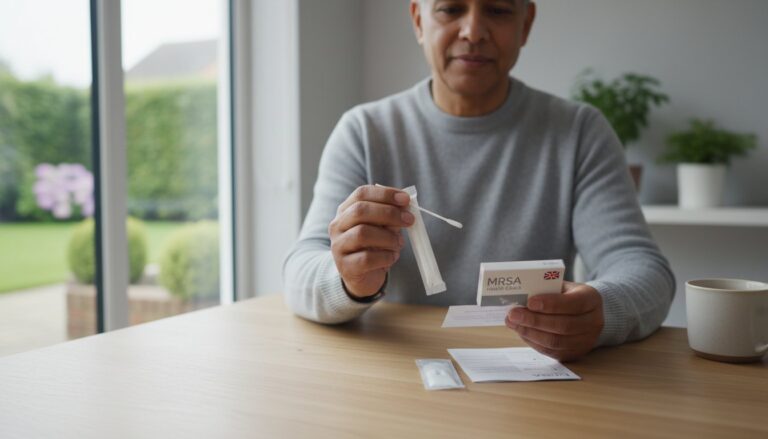
Not all vital health information requires a blood sample. Many specific screenings use different, equally simple collection methods. A prime example is pre-operative screening for MRSA (Methicillin-resistant Staphylococcus aureus), a critical step in preventing post-surgical infections.
This essential check doesn’t involve a needle; instead, it uses a simple and painless swab test. Identifying MRSA colonisation before a hospital admission allows for effective measures to be taken, significantly reducing the risk of complications. It is a simple, proactive measure that contributes directly to surgical safety and a smoother recovery. Taking this step from home provides both reassurance and a confidential way to prepare for your procedure. Learn about confidential, at-home MRSA screening kits.
Your Health in Your Hands: The Power of Understanding Tests
Navigating the world of medical diagnostics can feel complex, but as we have explored, gaining clarity is a crucial step toward becoming an active participant in your own healthcare. From understanding what to expect during the procedure to learning how to read your blood test results, this knowledge empowers you. The rise of at-home testing now provides an unprecedented level of convenience and privacy, allowing you to take proactive measures from the comfort of your home.
This convenience is especially vital for specific screenings. If you have concerns about MRSA, you can now take a simple, proactive step without a clinic visit. We provide a testing service that puts your privacy and peace of mind first, offering a clear path to the answers you need.
Explore our confidential at-home MRSA screening kits. Partnered with a fully UKAS-accredited UK laboratory, we guarantee fast, reliable, and 100% confidential results. Every kit includes discreet packaging and free, tracked shipping for your complete convenience.
Taking charge of your health is a powerful journey, and having access to trusted, accessible solutions makes all the difference. Stay informed and be proactive about your well-being.
Frequently Asked Questions About Blood Tests
Does getting a blood test hurt?
For most people, a blood test involves a brief, sharp scratch as the needle is inserted. The discomfort is minimal and lasts only for a moment. The procedure is performed by a trained professional, such as a phlebotomist, who is skilled at making the process as comfortable and efficient as possible. Any slight bruising that may appear at the site typically fades very quickly, making the experience straightforward for most patients.
How long does it take to get blood test results back?
The time it takes to receive your results can vary. Common tests processed by an NHS or private lab often return results within a few days to a week. More complex or specialised tests may take longer. Your GP or the clinic will advise you on the expected timeframe and how you will be notified. This could be via a phone call, a follow-up appointment, or through a secure online patient portal for confidential access.
What should I do if my blood test results are abnormal?
An abnormal result does not automatically indicate a serious health problem; it is simply a value that falls outside the standard reference range. It is crucial to discuss the findings with the healthcare professional who ordered the test. They will interpret the results in the context of your overall health and medical history, and will advise on any necessary next steps, which may include further testing or a specific treatment plan.
Can I eat or drink before my blood test?
This depends entirely on the type of blood test you are having. Some tests, such as those for glucose or cholesterol (a lipid panel), require you to fast for 8-12 hours to ensure an accurate result. For these, you can typically drink water but should avoid all other food and drink. For many other tests, fasting is not required. Always follow the specific instructions provided by your GP or clinic to ensure your results are reliable.
Are home testing kits as reliable as those from a GP?
The reliability of at-home testing kits can be very high, provided they are from a reputable provider that uses a UKAS-accredited laboratory for analysis. These kits offer excellent convenience and confidentiality. However, a test ordered by a GP is part of a broader clinical assessment. Your doctor can interpret the results alongside your medical history, providing a more comprehensive diagnosis and immediate advice on the next steps for your care.
Why do I need to get screened for MRSA before surgery?
MRSA (Meticillin-resistant Staphylococcus aureus) is a bacteria that can live harmlessly on the skin, a state known as colonisation. However, if it enters the body through a surgical wound, it can cause a serious infection that is difficult to treat. Pre-operative screening is a crucial safety measure to identify if you are carrying the bacteria, allowing healthcare professionals to take preventative steps to protect you and ensure a safer surgical outcome.