
Understanding a Lipid Profile Blood Test: A Simple Guide
Receiving a blood test report filled with terms like LDL, HDL, and triglycerides can often feel overwhelming. The numbers can seem abstract, leaving you with more questions and anxiety than answers. This is a common experience when trying to understand the results of a lipid profile test. If you’ve ever felt confused by your cholesterol levels or unsure what to do next, you are not alone. Understanding these key health markers is the first step towards taking proactive care of your heart.
This simple guide is designed to translate the medical jargon into clear, understandable information. We will break down exactly what a lipid profile test measures, clarifying the difference between ‘good’ and ‘bad’ cholesterol in straightforward terms. You will learn how to properly prepare for your test and, most importantly, gain a clear understanding of what your results mean for your health. Our goal is to replace uncertainty with confidence, empowering you to discuss your cardiovascular well-being with your doctor and plan the best next steps.
Key Takeaways
- Learn what a lipid profile test is and why it serves as a crucial screening tool for assessing your cardiovascular health.
- Understand the four key measurements in your results, including ‘good’ (HDL) and ‘bad’ (LDL) cholesterol, and what they signify for your body.
- Discover the simple but essential steps for preparation, such as fasting, to ensure your test results are accurate and reliable.
- Find out what your results mean and the proactive steps you can discuss with your GP if your levels are outside the normal range.
What Is a Lipid Profile Test and Why Is It Important?
A lipid profile test is a crucial blood test that provides a detailed picture of the fats, or lipids, in your bloodstream. Lipids are fat-like substances that are essential for normal body function, but imbalanced levels can significantly increase your risk of developing cardiovascular disease, such as heart attacks and strokes. By measuring these key substances, your doctor gains valuable insight into your heart health. Think of it as a fundamental part of a proactive and preventive health check-up, allowing for early detection and management of potential risks before they become serious problems.
What Does a Lipid Profile Measure?
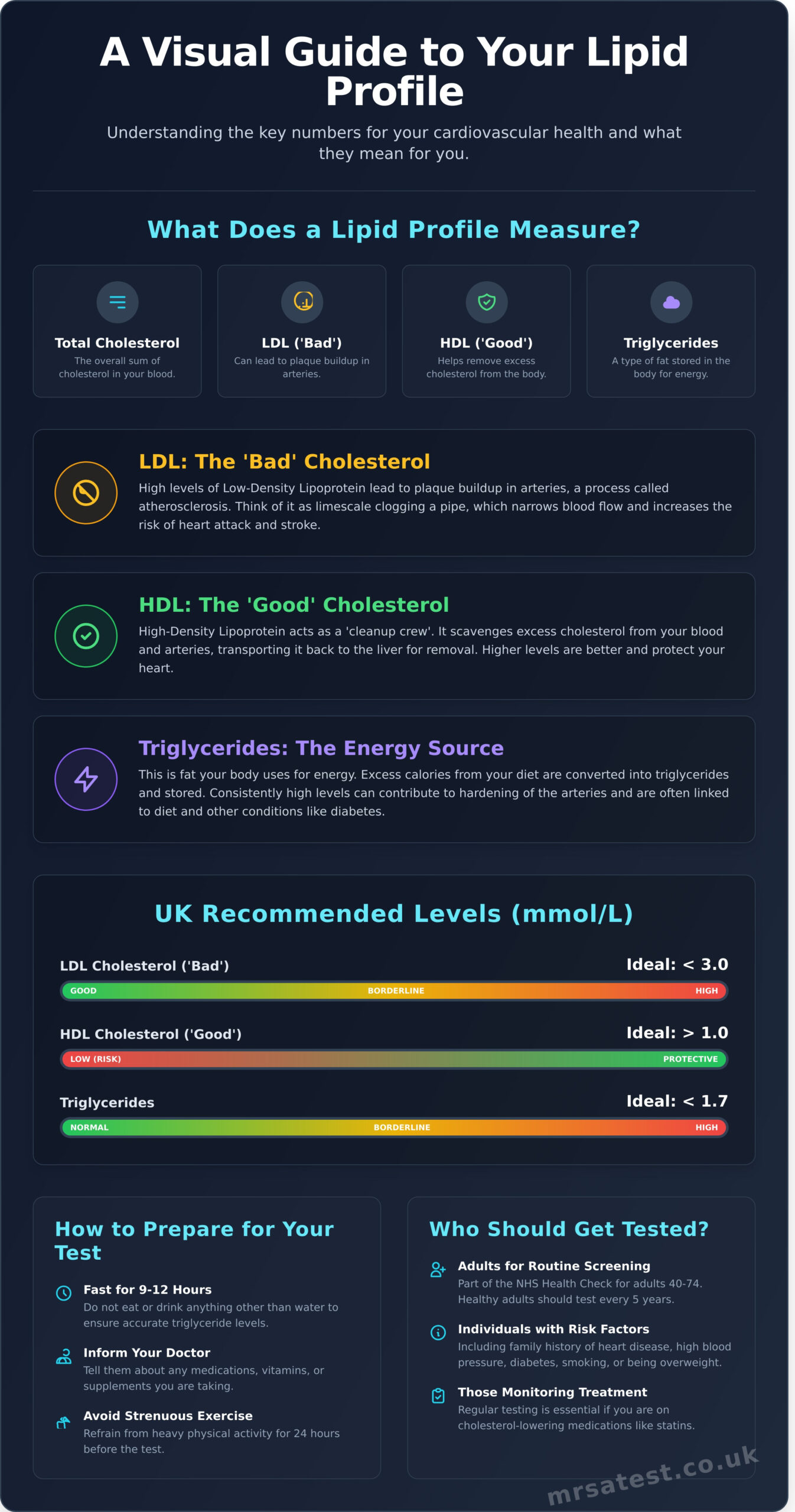
This simple blood test provides a comprehensive snapshot of the different types of fat circulating in your body. While the exact panel can vary, a standard lipid profile test typically includes four key measurements to assess your health:
- Total Cholesterol: The overall amount of cholesterol in your blood.
- Low-Density Lipoprotein (LDL) Cholesterol: Often called “bad” cholesterol, high levels can lead to the build-up of plaque in your arteries.
- High-Density Lipoprotein (HDL) Cholesterol: Known as “good” cholesterol, it helps remove excess cholesterol from your body.
- Triglycerides: A type of fat used for energy. High levels are often associated with other risk factors for heart disease.
Sometimes, the report will also include calculated values, such as the total cholesterol-to-HDL ratio, to provide an even clearer assessment of your cardiovascular risk.
Who Needs a Lipid Profile Test?
A lipid profile is a routine and important test for many individuals. It is generally recommended for:
- All adults as part of routine screening. In the UK, it is often part of the NHS Health Check for adults aged 40-74. Healthy adults should typically be tested every five years, or more frequently if results are abnormal.
- Individuals with risk factors for heart disease. This includes anyone with a family history of heart disease, high blood pressure, diabetes, a smoking habit, or who is overweight.
- Those monitoring treatment. If you have been prescribed cholesterol-lowering medication like statins, regular testing is essential to monitor how effective the treatment is and to ensure your lipid levels are within a safe range.
Decoding Your Lipid Profile Results: What Each Number Means
Your lipid profile test provides more than a single number; it offers a detailed snapshot of the different types of fats (lipids) circulating in your blood. Understanding what each of these figures represents is the first step in assessing your cardiovascular health. It is essential to remember that a clinician will interpret these results together, not in isolation, to build a complete and accurate picture. Each component tells a different part of the story about your risk of developing heart disease.
To help you interpret your report, we will break down the four key measurements. For a further detailed overview, the U.S. National Library of Medicine offers an excellent guide for Decoding Your Lipid Profile Results.
LDL (Low-Density Lipoprotein): The ‘Bad’ Cholesterol
LDL’s primary role is to transport cholesterol to the cells that need it. However, when your LDL level is too high, it can lead to a buildup of cholesterol in your arteries, forming hard deposits called plaque. Think of it like grit or limescale slowly accumulating inside a pipe, which narrows the passage and restricts flow over time. This process, known as atherosclerosis, increases your risk of heart attack and stroke. For healthy adults in the UK, an ideal LDL level is generally considered to be 3 mmol/L or below.
HDL (High-Density Lipoprotein): The ‘Good’ Cholesterol
HDL acts as your body’s arterial ‘cleanup crew’. It scavenges for excess cholesterol in your blood and arteries and transports it back to the liver, where it is broken down and removed from the body. Because of this protective function, higher HDL levels are desirable. Unlike other lipids, with HDL, a higher number is better. In the UK, a healthy, protective HDL level is considered to be above 1 mmol/L.
Triglycerides: The Most Common Type of Fat
Triglycerides are a type of fat found in your blood that your body uses for energy. When you consume more calories than you need-particularly from high-carbohydrate or high-fat foods-your body converts them into triglycerides and stores them in your fat cells. Consistently high levels are often linked to diet, obesity, and other conditions like type 2 diabetes, and can contribute to the hardening of arteries. A normal triglyceride level is below 1.7 mmol/L.
Total Cholesterol: The Overall Picture
This figure is a combined measure of your LDL, HDL, and other lipid components. It is typically calculated using the formula: Total Cholesterol = LDL + HDL + (Triglycerides/2.2). While it provides a general overview, the specific breakdown is far more informative for risk assessment. For example, a high total cholesterol could be due to dangerously high LDL, but it could also be influenced by a very high, protective HDL level. This is why your doctor analyses the full breakdown from your lipid profile test, not just this single figure.
Preparing for Your Lipid Profile Test: Fasting and Other Steps
To ensure your lipid profile test provides the most accurate and reliable results, a small amount of preparation is required. The process is simple and straightforward, designed to give your GP a clear and precise picture of your cardiovascular health. Following these guidelines is the most important step you can take toward a useful assessment.
Why is Fasting Necessary?
The primary reason for fasting is to get an accurate measurement of your triglycerides, a type of fat found in your blood. The food and drink you consume, particularly those high in fats and sugars, can cause your triglyceride levels to rise temporarily. This can skew the results and not reflect your true, resting state.
For a standard lipid profile test, you will typically be asked to fast for 9 to 12 hours before your blood sample is taken. This provides a true baseline reading, which is essential for your doctor to accurately assess your risk and compare your results against established guidelines for Normal vs. High Cholesterol Levels. Scheduling your appointment for the morning makes it convenient to fast overnight while you sleep.
What Can You Have During a Fast?
While you must avoid all food, it is important to understand what is and is not permitted during your fasting period. The instructions are simple to follow:
- Water: You can and should drink plain water. Staying hydrated is important for your well-being and can make the blood draw easier. It will not affect your test results.
- Other Drinks: You must avoid all other beverages. This includes coffee, tea (even black or without sugar), fruit juice, milk, and fizzy drinks, as they can interfere with your lipid levels.
- Medications: Continue to take your prescribed medications as usual unless your GP or the clinic has specifically instructed you otherwise. If you are diabetic or have any concerns, please confirm with your healthcare provider.
By following these simple steps, you help ensure that your test results are a true reflection of your health, enabling effective monitoring and treatment if required.
Understanding Your Results: Normal vs. High Cholesterol Levels
Once your blood sample has been analysed, you will receive a report detailing the levels of different fats in your blood. These results from your lipid profile test provide a crucial snapshot of your cardiovascular health. However, it is important to remember that these numbers are part of a larger clinical picture. The reference ranges are general guidelines, and only a qualified healthcare professional can interpret them in the context of your overall health, medical history, and other risk factors.
Reference Ranges for Adults (UK)
In the UK, lipid levels are measured in millimoles per litre (mmol/L). The following table provides a guide to what is generally considered desirable for a healthy adult without other underlying health conditions. These values are based on current NHS and NICE guidelines.
| Lipid Component | Optimal / Desirable | Borderline High | High |
|---|---|---|---|
| Total Cholesterol | Below 5.0 mmol/L | 5.0 – 6.4 mmol/L | 6.5 mmol/L and above |
| LDL Cholesterol (‘Bad’ Cholesterol) | Below 3.0 mmol/L | 3.0 – 4.0 mmol/L | 4.1 mmol/L and above |
| Non-HDL Cholesterol | Below 4.0 mmol/L | 4.0 – 5.0 mmol/L | 5.1 mmol/L and above |
| HDL Cholesterol (‘Good’ Cholesterol) | Above 1.0 mmol/L* | N/A | N/A (Lower is a risk) |
| Triglycerides (Fasting) | Below 1.7 mmol/L | 1.7 – 2.2 mmol/L | 2.3 mmol/L and above |
*Note: For HDL cholesterol, a higher number is better. The desirable level for women is often cited as above 1.2 mmol/L.
What Factors Influence Your Lipid Levels?
Your lipid profile test results are influenced by a combination of factors, some of which are within your control. Understanding these can empower you to take positive steps towards managing your cholesterol.
- Non-Modifiable Factors: These are characteristics you cannot change, such as your age (cholesterol tends to rise as you get older), your genetics (a family history of high cholesterol increases risk), and your biological sex.
- Modifiable Lifestyle Factors: These are areas where you can make a significant impact. Key factors include your diet (particularly intake of saturated fats), your weight, your level of physical activity, and whether you smoke.
Additionally, certain medical conditions, including an underactive thyroid, kidney disease, and type 2 diabetes, can lead to elevated lipid levels. This is why a thorough discussion with your GP is essential to create a safe and effective management plan tailored to you.
What Happens After Your Test? Next Steps for Abnormal Results
Receiving the results of your lipid profile test is the first step towards understanding and managing your cardiovascular health. If your results fall outside the normal range, it is important not to feel alarmed. Instead, view this information as a valuable opportunity-a starting point for making positive changes to protect your long-term well-being. The most crucial next step is to discuss your results with your GP or healthcare provider, who can interpret them in the context of your overall health, age, and family history.
Lifestyle and Dietary Changes
For many individuals, abnormal lipid levels can be effectively managed through targeted lifestyle adjustments. Your doctor will likely recommend this as the first line of approach. These changes are powerful tools for improving your cholesterol and triglyceride levels and are foundational to cardiovascular health.
- Dietary Adjustments: Focus on reducing your intake of saturated and trans fats, often found in red meat, processed foods, and full-fat dairy. Increase your consumption of soluble fibre from sources like oats, fruits, and vegetables, and incorporate heart-healthy fats from oily fish, nuts, and seeds.
- Regular Physical Activity: Aim for at least 150 minutes of moderate-intensity exercise, such as brisk walking or cycling, per week, as recommended by the NHS.
- Other Positive Changes: Achieving and maintaining a healthy weight, stopping smoking, and moderating alcohol intake can all have a significant positive impact on your lipid levels.
When making these dietary adjustments, focusing on the quality of your ingredients is also key. For instance, if you eat meat, choosing leaner cuts from a specialist butcher rather than processed options can be part of a heart-healthy approach. Exploring a high-quality provider like the one found at theartisanbutcher.com can give you a better understanding of well-sourced meat options.
Medical Treatment Options
If lifestyle modifications do not sufficiently lower your lipid levels, or if your initial risk is considered high, your doctor may prescribe medication. The most common class of drugs used to lower LDL cholesterol are statins, which work by reducing the amount of cholesterol produced by your liver. The decision to start medication is always a collaborative one, made after a thorough discussion with your doctor about the benefits and potential risks. An accurate lipid profile test provides the clear, reliable data needed for this important conversation.
Trust in accurate testing is key. Learn about our commitment to reliability.
Your Path to Understanding and Managing Cholesterol
Ultimately, a lipid profile test is more than just numbers on a page; it is a vital tool for understanding your cardiovascular risk. By decoding your LDL, HDL, and triglyceride levels, you gain the essential knowledge needed to have productive conversations with your doctor. This understanding is the foundation for making meaningful lifestyle changes or considering medical treatments if necessary, putting you firmly in control of your heart health.
For those seeking a convenient and reliable testing solution, mrsatest.co.uk provides a fully confidential and discreet service. As a 100% UK-based company, we partner exclusively with a UKAS-accredited laboratory to ensure you receive clinically accurate results you can trust, all from the comfort of your home. Learn about our commitment to providing accurate, at-home test kits.
Taking proactive steps to monitor your health is a powerful investment in your future. Be empowered by your results and take charge of your well-being today.
Frequently Asked Questions
How often should I have a lipid profile test?
In the UK, adults aged 40 to 74 are typically invited for a free NHS Health Check every five years, which includes cholesterol screening. However, your GP may recommend a more frequent lipid profile test if you have certain risk factors. These can include a family history of heart disease or high cholesterol, being overweight, having diabetes, or high blood pressure. Always follow the testing schedule advised by your healthcare provider.
Can stress or medication affect my cholesterol results?
Yes, both of these factors can influence your cholesterol levels. Chronic stress can lead to higher levels of ‘bad’ LDL cholesterol, often due to associated lifestyle habits. Furthermore, certain medications-such as some types of beta-blockers, diuretics, and steroids-can alter your lipid profile. It is important to inform your doctor about any medications you are taking before your test to ensure the results are interpreted accurately.
While the focus is often on psychological stress, some people also consider the impact of environmental stressors on overall health and well-being. For those curious about creating a healthier home environment, you can check out Radiation-Free Living for a different perspective.
Is a non-fasting lipid profile ever used, and is it accurate?
Yes, non-fasting lipid tests are now commonly used for initial screening as they are more convenient for patients. For most people, total cholesterol and HDL cholesterol levels are not significantly affected by a recent meal. While triglycerides can be higher, these results still provide valuable information for risk assessment. If your non-fasting results are abnormal, your GP may then request a follow-up fasting test for a more detailed evaluation.
What is the difference between cholesterol and triglycerides?
Cholesterol and triglycerides are both types of lipids (fats) in your blood, but they serve different purposes. Cholesterol is a waxy substance used to build healthy cells, produce hormones, and aid digestion. Triglycerides are a type of fat that your body uses for energy, storing any excess calories from your diet. While both are necessary, elevated levels of either, particularly LDL cholesterol and triglycerides, can increase your risk of cardiovascular disease.
Can children and young adults have high cholesterol?
Yes, it is possible for children and young adults to have high cholesterol. This is often due to a genetic condition known as familial hypercholesterolemia (FH), which causes unusually high cholesterol levels from a young age. Lifestyle factors, including diet and lack of exercise, can also play a role. A lipid profile test may be recommended for children with a strong family history of early heart disease or high cholesterol.
Does ‘good’ HDL cholesterol cancel out ‘bad’ LDL cholesterol?
This is a common misconception. While high-density lipoprotein (HDL) cholesterol is beneficial because it helps remove excess cholesterol from your arteries, it does not completely cancel out the negative effects of high low-density lipoprotein (LDL) cholesterol. A high LDL level remains a significant risk factor for heart disease, even if your HDL is also high. The goal is to achieve a healthy balance, primarily by lowering your LDL while maintaining a good HDL level.