

Preparing for Surgery: A Complete Pre-Op Health & Logistics Checklist
The period leading up to a scheduled operation can feel overwhelming. With a list of complex medical instructions to follow, questions about fasting or medications, and logistical details to arrange, it is natural to feel anxious and unsure of where to begin. A structured, methodical approach to preparing for surgery is the most effective way to replace that uncertainty with a sense of calm and control, ensuring you are ready both physically and mentally for the procedure ahead.
This comprehensive guide is designed to be your trusted pre-operative checklist. We will walk you through every critical step, from optimising your health and diet to managing your home and work life before you are admitted. Our goal is to demystify the process and provide a clear, actionable plan that addresses your concerns. By following these steps, you can approach your procedure feeling informed and confident, creating the best possible foundation for a safe and speedy recovery.
The Pre-Operative Health MOT: Building Your Foundation for Recovery (4-6 Weeks Out)
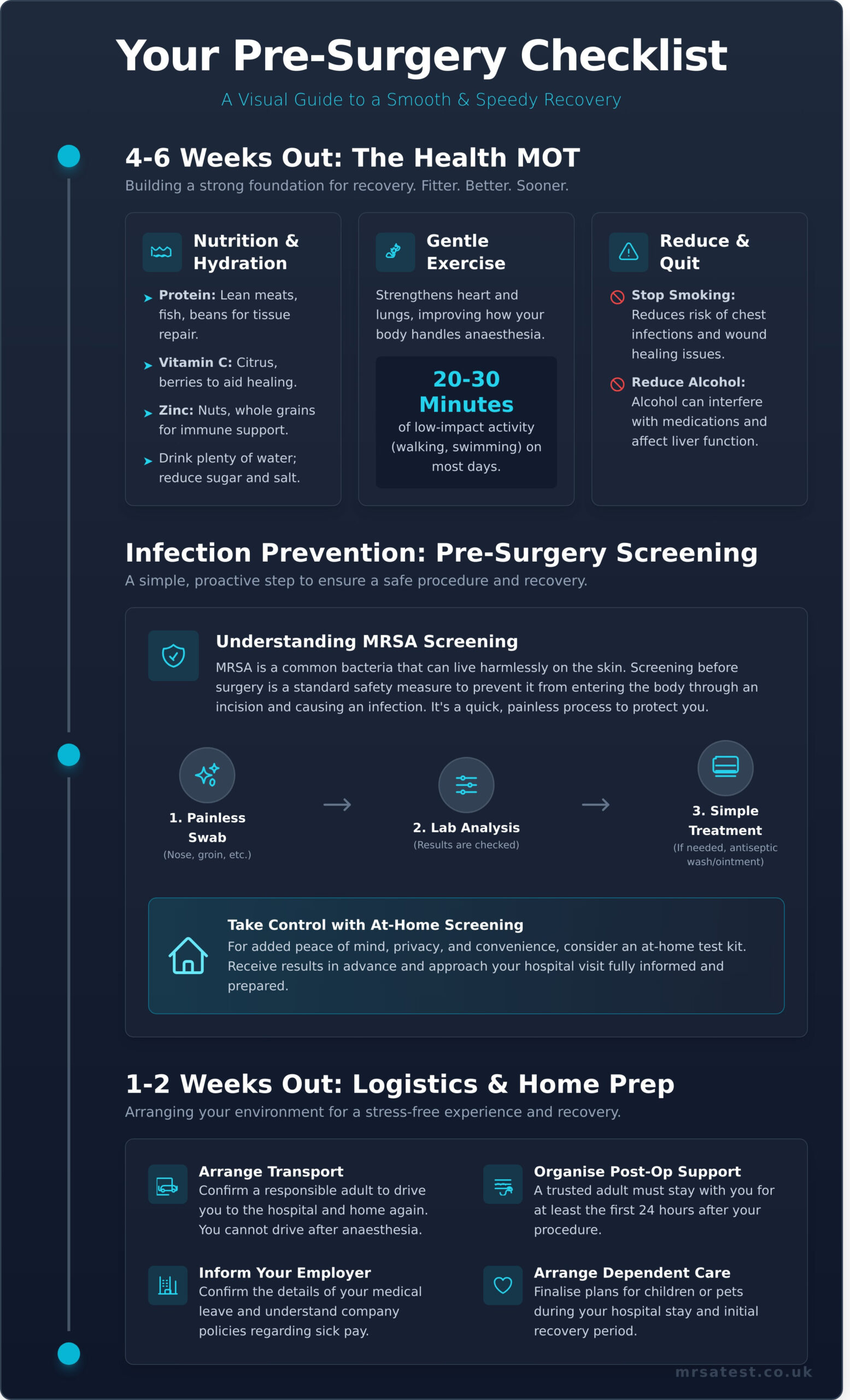
The weeks leading up to your operation are a critical window of opportunity. This period is not about waiting passively; it’s about actively preparing for surgery to ensure the best possible outcome. The principle is simple and clinically proven: the fitter and healthier you are before an operation, the quicker and more smoothly you are likely to recover. This approach, often called ‘Fitter Better Sooner’, focuses on making small, manageable changes that have a significant impact on your body’s ability to heal. Effective preoperative care is proven to reduce the risk of complications, lower the chance of infection, and can even shorten your stay in hospital. Always consult your GP or surgical team before making any significant lifestyle changes.
Nutrition and Hydration for Healing
Think of food as the fuel your body needs to repair itself. Focus on a balanced diet rich in protein, which is essential for tissue repair, and vitamins and minerals that support healing. Key nutrients include:
- Protein: Lean meats, poultry, fish, beans, and lentils.
- Vitamin C: Citrus fruits, berries, peppers, and broccoli.
- Zinc: Nuts, seeds, and whole grains.
Aim to drink plenty of water to stay well-hydrated, and reduce your intake of processed foods, excess sugar, and salt, which can cause inflammation.
The Role of Gentle, Consistent Exercise
Improving your physical fitness, even slightly, can have a profound effect on your recovery. Regular, gentle exercise strengthens your heart and lungs, which helps your body cope better with anaesthesia and the physical stress of surgery. Aim for 20-30 minutes of low-impact activity, such as brisk walking, swimming, or cycling, on most days. Even short, frequent walks can improve circulation and build stamina. The goal is consistency, not intensity.
Reducing Alcohol and Quitting Smoking
Stopping smoking is one of the most important steps you can take before surgery. Smoking impairs lung function, reduces oxygen in the blood, and significantly increases the risk of post-operative chest infections and wound healing problems. Similarly, alcohol can interfere with medications, affect liver function, and contribute to dehydration. Even reducing your intake in the weeks before your operation can make a positive difference. For support, please see these trusted NHS resources:
Infection Prevention: The Critical Role of Pre-Surgery Screening
When you are preparing for surgery, your health and safety are the top priority for your clinical team. Hospitals in the UK adhere to strict infection control protocols to minimise the risk of hospital-acquired infections (HAIs). A key part of this safety strategy is pre-operative screening for specific bacteria that could cause complications. This is a standard, proactive step designed to ensure your procedure and recovery are as smooth and safe as possible. One of the most common screenings is for MRSA.
What is MRSA and Why Does it Matter for Surgery?
MRSA stands for Methicillin-resistant Staphylococcus aureus. In simple terms, it is a type of bacteria that has become resistant to several common antibiotics. It’s important to know that many people carry MRSA on their skin or in their nose without it causing any harm-a state known as colonisation. However, during surgery, an incision can provide a direct entry point for these bacteria into the body, where they can cause a serious infection. Identifying MRSA beforehand is not a cause for alarm; it simply allows your hospital team to take simple, effective preventative measures to protect you.
Understanding the Pre-Surgical Screening Process
The standard NHS screening process is quick, simple, and painless. It typically takes place during your pre-operative assessment appointment and involves a nurse taking a swab from a few areas of your body. Common sites for swabbing include:
- The inside of your nostrils
- Your groin or armpit
- Any open wounds or sores
If your test result is positive, your care team will provide you with a special antiseptic body wash or a nasal ointment to use for several days before your operation. This simple treatment is highly effective at clearing the bacteria from your skin, significantly reducing the risk of a post-surgical infection.
Taking Control with Convenient At-Home Screening
For some patients, the privacy, convenience, and control of testing at home offers valuable peace of mind. An at-home test allows you to take a sample on your own schedule and receive your results in advance, which can help reduce anxiety as you are preparing for surgery. This is an ideal option if you wish to be fully informed and proactive about your health before your hospital visit. Learn about confidential at-home MRSA test kits.
Logistics and Home Prep: Setting Up for a Smooth Experience (1-2 Weeks Out)
In the final weeks, the focus of preparing for surgery shifts from your internal health to your external environment. Attending to practical arrangements now is a crucial step to reduce stress on the day of your procedure and to facilitate a smooth, comfortable recovery. This is an ideal time to involve family or trusted friends in your planning, allowing them to provide meaningful support.
Arranging Transport and Post-Op Support
You will not be permitted to drive yourself home after receiving anaesthesia. It is essential to make firm arrangements for your transportation and immediate post-operative care. Consider the following checklist:
- Confirm your transport: Arrange for a responsible adult to drive you to the hospital and, most importantly, to collect you upon discharge.
- Organise a support person: Most hospitals require a trusted adult to stay with you for at least the first 24 hours after surgery.
- Arrange dependent care: If you have children or pets, finalise plans for their care during your hospital stay and initial recovery period.
- Inform your employer: Confirm the details of your medical leave and understand your company’s sick pay policy. Ensure any necessary paperwork is completed.
Preparing Your Home for a Comfortable Recovery
Returning to a clean, organised, and well-stocked home can significantly improve your recovery experience. Your mobility may be limited, so preparing in advance is key. Aim to create a safe and restful environment.
- Stock your kitchen: Fill your pantry and freezer with simple, easy-to-prepare meals, drinks, and snacks.
- Create a ‘recovery nest’: Set up a comfortable space on the ground floor if possible. Keep essential items within easy reach, including pillows, blankets, remote controls, books, your mobile phone and charger, and a water bottle.
- Clean your space: Do a thorough clean of your home and change your bed linens before you leave.
- Ensure safety: Clear pathways to the bathroom and kitchen, removing any potential trip hazards like rugs or clutter.
Sourcing all these items, from fresh bed linens and toiletries to easy-to-prepare snacks, can be done conveniently online, saving you valuable energy. For a wide selection of home and lifestyle essentials that can be delivered directly to your door, read more.
While you’re focusing on immediate safety like trip hazards, this period of home preparation can also be a prompt to consider the broader structural integrity of your environment. Ensuring your home is a safe, sound place for recovery is paramount. For those looking for professional assessments, specialist firms like Schippers Bouwconsult BV in the Netherlands offer a great example of the kind of thorough building inspections that provide ultimate peace of mind.
Organising Important Paperwork
Having all your documents in one place prevents last-minute panic. A well-organised folder with your medical and personal information is invaluable for a smooth hospital admission process.
- Gather documents: Collect your hospital admission letter, a form of photo ID, and any private insurance details.
- List your medications: Compile a clear, up-to-date list of all medications you take, including prescriptions, over-the-counter drugs, and supplements, with their dosages. Note any allergies.
- Compile contact numbers: Have a list of important phone numbers for your next of kin, GP, and other key contacts.
- Prepare your questions: Write down any final questions you have for your surgeon or anaesthetist.
The Final Countdown: Your Guide for the Last 48 Hours
The final 48 hours are a critical phase in preparing for surgery. Following your hospital’s instructions with precision during this time is essential for your safety and ensures your procedure can go ahead as planned. Any deviation, particularly with fasting or medication, could result in a last-minute cancellation. Use this checklist to stay on track.
Medication Management
Your pre-operative assessment nurse will provide a detailed, personalised plan for your medication. It is vital to adhere to this without exception. Confirm with your clinical team which medications to stop or continue, paying close attention to:
- Blood thinners: Such as aspirin, clopidogrel, or warfarin.
- Supplements: Including herbal remedies and vitamins (e.g., Vitamin E, fish oil), which can affect bleeding.
- Daily Medications: For conditions like diabetes or high blood pressure.
Always follow the hospital’s instructions exactly as given. Prepare any medications you have been instructed to bring with you in their original packaging.
Fasting: Following the Rules for Your Safety
Fasting before an operation is a crucial safety measure. It ensures your stomach is empty to prevent stomach contents from entering your lungs while you are under general anaesthesia, a serious complication known as aspiration. While general guidelines exist, your hospital’s specific timeline is the only one you must follow.
- General Rule: Typically, no solid food for 6-8 hours before your scheduled arrival time.
- Clear Fluids: You may be allowed clear fluids up to 2 hours before. ‘Clear fluids’ are liquids you can see through, such as water, black tea or coffee (no milk), and clear broth.
Packing Your Hospital Bag
Pack a small bag with necessities for comfort and convenience. Leave valuables, including jewellery and large amounts of cash, safely at home. Consider packing:
- Essentials: Comfortable nightwear, dressing gown, slippers, toiletries, your glasses or contact lens case, and a phone charger.
- Comfort Items: A book, headphones, an eye mask, or earplugs can make your stay more pleasant.
- Going-Home Outfit: Pack loose, comfortable clothing to wear on your journey home.
The Morning of Surgery
On the day, follow your final pre-operative instructions carefully. This is your final checklist before leaving for the hospital.
- Hygiene: You will likely be asked to shower or bathe, possibly using a special antiseptic skin wash (like chlorhexidine gluconate or CHG) to reduce bacteria on your skin. This is part of a comprehensive approach to patient safety, which also includes pre-operative screening like that for MRSA.
- Do Not Use: Lotions, deodorant, perfume, or makeup after your pre-op shower.
- Remove: All jewellery (including piercings), nail polish, and contact lenses.
- Arrival: Plan your journey and arrive at the hospital with plenty of time to spare, as instructed.
Your Final Checklist for a Confident Surgical Outcome
Thoroughly preparing for surgery is a comprehensive process that empowers you on your path to recovery. From optimising your physical health weeks in advance to organising your home for a comfortable recuperation, each step builds a strong foundation for a successful outcome. A crucial part of this preparation involves proactive safety measures, particularly pre-operative infection screening to minimise the risk of complications.
You can take control of this vital safety check with complete convenience and privacy. Our simple at-home self-collection process allows you to test for MRSA from the comfort of your own home, with your sample processed by our trusted, UKAS-accredited UK laboratory partner. With discreet packaging and fully confidential results, you gain invaluable peace of mind before your procedure.
Take a proactive step for your safety. Order your confidential MRSA Home Test Kit today. You’ve done the important work to prepare, and now you can approach your procedure with the confidence that you are fully ready for a smooth and speedy recovery.
Frequently Asked Questions About Preparing for Surgery
What are the most important questions to ask my surgeon before the operation?
To feel fully informed, ask your surgeon about the specific risks and benefits of the procedure, the type of anaesthesia that will be used, and the expected recovery timeline. It is also wise to inquire about post-operative pain management and when you can safely resume normal activities like driving or working. Having clear, professional answers to these questions is a crucial step in preparing for surgery and helps ensure you are mentally and practically ready.
How can I best manage my anxiety and stress before surgery?
Pre-operative anxiety is very common. Practical techniques such as deep breathing exercises, mindfulness, or listening to calming music can be highly effective. Ensure you understand the procedure, as knowledge often reduces fear. Do not hesitate to discuss your concerns with your GP, surgeon, or anaesthetist; they are there to support you. Speaking with a trusted friend or family member can also provide valuable reassurance and help to calm your nerves.
Can I drink water before surgery?
You must follow the specific fasting instructions provided by your hospital or surgical team. Typically, patients are advised to stop eating solid food six hours before the operation. You may be permitted to drink clear fluids, such as water, up to two hours before your admission time. However, this can vary. Always confirm the exact timings with your anaesthetist or pre-operative assessment nurse to ensure your absolute safety during the procedure.
Why do I need to remove nail polish and jewellery?
Removing all nail polish, gels, and acrylics is a critical safety measure. The clinical team places a small monitoring device on your fingertip to measure your blood oxygen levels, and nail coverings can interfere with this reading. Jewellery must be removed to prevent the risk of burns from electrical surgical equipment and to avoid complications related to swelling. These simple steps allow the team to monitor you accurately and safely throughout your operation.
What should I do if I get sick (e.g., a cold) in the days before my surgery?
If you develop an illness such as a cold, cough, or fever, it is essential to inform the hospital immediately. Do not wait until the day of your surgery to report your symptoms. An anaesthetist must assess whether it is safe for you to proceed, as even a minor illness can increase anaesthetic risks. Contact your hospital’s pre-assessment clinic or the surgeon’s secretary as soon as you feel unwell for professional guidance.