
MRSA Screening for Surgery: A Complete Patient Guide
You’re preparing for an important operation, but a single, often misunderstood test can feel like a major hurdle. The thought of a positive result, or simply the inconvenience of scheduling a pre-op appointment, can add significant stress when you need it least. This worry is common, but understanding the purpose and process of MRSA screening for surgery is the first step towards feeling in control and ensuring your procedure goes ahead without any unexpected delays.
This complete patient guide is designed to give you that control. We will walk you through exactly why this screening is a crucial safety measure, what to expect from the simple testing process, and how to interpret your results calmly and correctly. Our goal is to provide clear, trusted information so you can approach your operation feeling prepared, confident, and fully reassured.
Why is MRSA Screening Necessary Before Surgery?
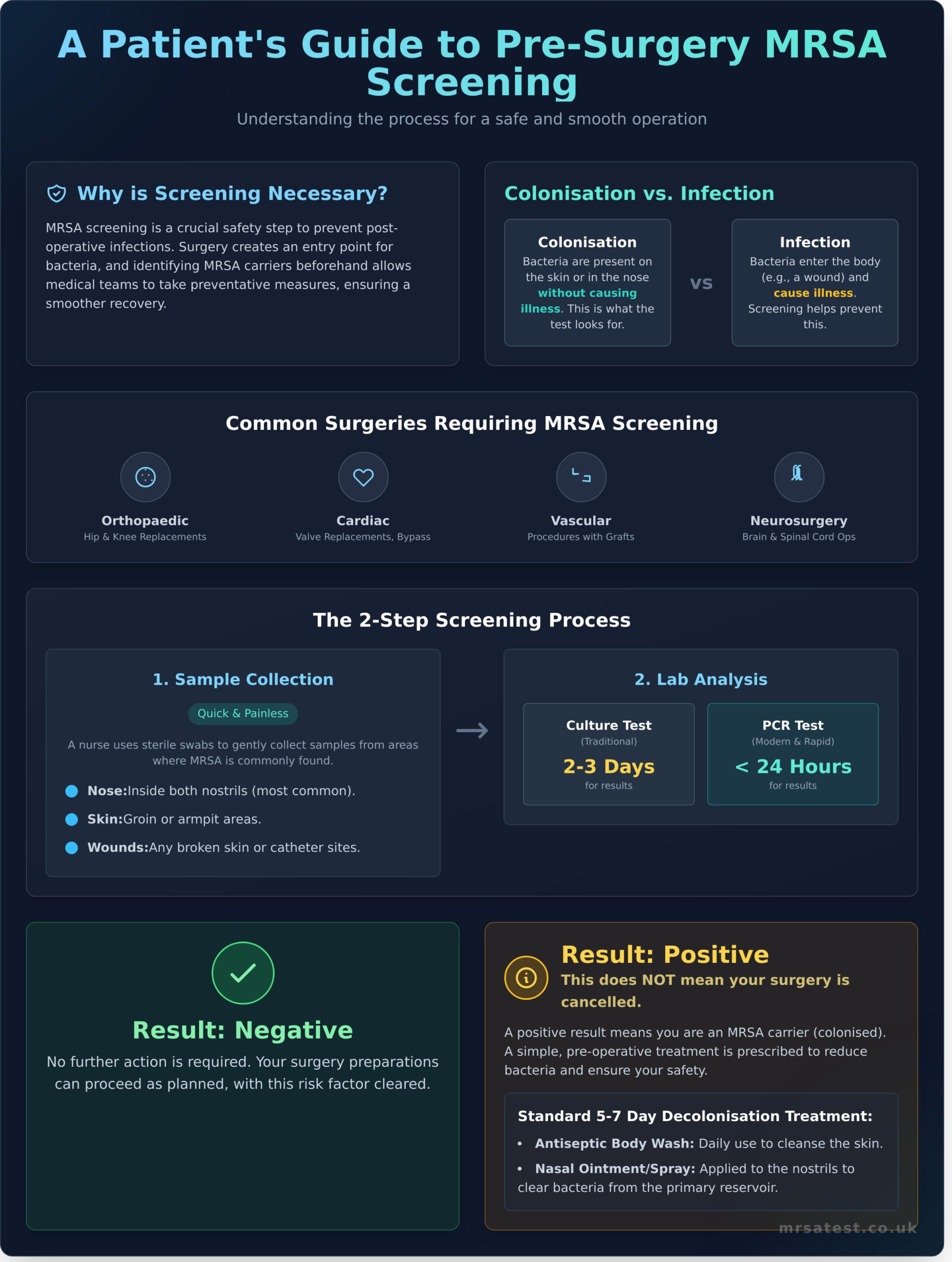
Preparing for an operation involves several important safety checks, and for many patients in the UK, this includes a routine test for MRSA. While it may sound concerning, this screening is a simple, preventative step designed to protect your health. Methicillin-resistant Staphylococcus aureus (MRSA) is a type of bacteria that many people carry on their skin or in their nose, usually without causing any harm. The situation changes during surgery; a surgical incision can provide a direct route for these bacteria to enter the body, where they can cause serious complications. Therefore, effective mrsa screening for surgery is a crucial part of the pre-operative process, helping your medical team minimise the risk of post-operative infections and ensure a smoother recovery.
Understanding MRSA: Colonisation vs. Infection
It is important to distinguish between being ‘colonised’ with MRSA and having an MRSA ‘infection’. Most people who test positive for MRSA are simply colonised, which means the bacteria are present on their body but are not causing any illness or symptoms. An infection occurs only when these bacteria breach the body’s defences-such as through a surgical wound-and begin to multiply, leading to a surgical site infection (SSI). The primary goal of pre-operative screening is to identify colonisation so that simple, effective decolonisation treatments can be given before your operation to prevent an infection from ever developing.
Which Types of Surgery Require MRSA Screening?
While policies can vary between different NHS trusts and private hospitals, mrsa screening for surgery is standard practice for procedures that carry a higher risk of infection. This is particularly true for operations involving the placement of a foreign body or implant, as these can provide a surface for bacteria to grow on. Common examples include:
- Orthopaedic surgery: Such as hip and knee replacements.
- Cardiac surgery: Including heart valve replacements and bypass operations.
- Vascular surgery: Procedures involving grafts.
- Neurosurgery: Operations on the brain or spinal cord.
By identifying MRSA carriers before these major procedures, surgical teams can take proactive steps to safeguard patient health, significantly reducing the risk of complex and difficult-to-treat infections.
The MRSA Screening Process: What to Expect
Understandably, the thought of any medical test before an operation can be a source of anxiety. However, it’s important to know that the MRSA screening process is designed to be simple, quick, and entirely painless. This routine mrsa screening for surgery is a standard part of pre-operative care in the UK, typically carried out during your pre-operative assessment at the hospital or at your local GP surgery. The entire procedure takes just a few minutes, causing minimal disruption to your day while providing vital information for your surgical team.
How and Where Samples are Collected
The collection method is non-invasive and straightforward. A trained nurse or healthcare assistant will use sterile, cotton-tipped swabs to gently collect samples from areas of the body where MRSA bacteria are most likely to be found. The process involves a gentle wipe of the skin or nostril lining and is not painful.
- The Nose: The inside of both nostrils is the most common site for swabbing, as this is a primary reservoir for MRSA.
- The Groin or Armpit: These warm, moist areas can also harbour the bacteria.
- Open Wounds: Any existing sores, broken skin, or catheter sites will also be swabbed to check for colonisation.
This comprehensive approach ensures that the screening is as accurate as possible, giving your medical team a clear picture of your MRSA status.
Laboratory Analysis: Culture vs. PCR Tests
Once collected, your swabs are sent to an accredited laboratory for analysis. There are two primary methods used for detecting MRSA:
Standard Culture Test: This is the traditional method, where the sample is placed in a special medium to see if MRSA bacteria grow. While highly accurate, this process requires time for the bacteria to multiply. Results are typically available within 2-3 days.
PCR (Polymerase Chain Reaction) Test: A more modern and rapid alternative, the PCR test is a molecular technique that detects the specific DNA of the MRSA bacteria directly from the swab. This method is significantly faster, with results often available within 24 hours of the lab receiving the sample, making it an efficient choice for pre-operative planning.
Understanding Your MRSA Test Results and Next Steps
Receiving your test results is a key step in your pre-operative journey. It’s natural to feel some apprehension, but the purpose of this screening is to ensure your procedure is as safe as possible. Whether your result is negative or positive, the process is straightforward and designed entirely for your protection.
If your result is negative, no further action is required regarding MRSA. You can proceed with your surgical preparations as planned, confident that this specific risk has been addressed.
If your result is positive, it is very important to understand that this does not usually mean your surgery will be cancelled. Instead, it allows your healthcare team to take simple, proactive steps to protect you. This is precisely why effective mrsa screening for surgery is a standard part of modern patient care.
What a Positive MRSA Result Means
A positive result indicates that you are ‘colonised’ with MRSA, meaning the bacteria is present on your skin or in your nose without causing any illness. You are a carrier, not someone with an active infection. The goal of your clinical team is simple: to reduce the amount of this bacteria before your operation. This dramatically lowers the risk of the bacteria entering your surgical wound and causing a post-operative infection, making it a crucial step towards a safer, smoother recovery.
Standard Decolonisation Treatment
If you are identified as an MRSA carrier, you will be prescribed a simple and highly effective decolonisation treatment to complete at home. This is a routine safety protocol that typically lasts for five to seven days before your surgery date.
The standard treatment course generally includes:
- An antiseptic body wash: You will be asked to wash or shower daily using a special skin cleanser, often one containing chlorhexidine, to reduce bacteria on your body.
- A nasal ointment: A dedicated cream or ointment is applied to the inside of your nostrils, as this is a common site for MRSA to reside.
- Enhanced hygiene: During the treatment period, it is recommended to use fresh towels, face cloths, and bed linen regularly to help prevent re-colonisation.
Following this simple regimen is one of the most effective actions you can take to contribute to a successful surgical outcome.
Your Options: NHS vs. Private At-Home MRSA Screening
When preparing for an operation, your surgical team will require you to undergo an MRSA test. Understanding your options ensures you can choose the pathway that best fits your circumstances, schedule, and personal preferences. In the UK, you generally have two choices for your pre-operative mrsa screening for surgery: the standard NHS route or a private at-home test kit.
The Standard NHS Pathway
The most common route for MRSA screening is through an NHS pre-operative assessment clinic. This is a reliable and established process integrated directly into your surgical care plan. The service is provided free of charge by the NHS, and your hospital will contact you to schedule the necessary appointment. While this is a trusted method, it can present challenges if you have a tight schedule, live far from the hospital, or if your surgery is scheduled at short notice. Result turnaround times can also vary depending on the local laboratory’s capacity.
The Benefits of a Private At-Home Test Kit
For those who need a faster, more flexible solution, a private at-home test kit offers a modern and highly convenient alternative. It is an ideal choice for individuals facing last-minute surgery dates or for those who simply prefer the privacy and comfort of managing their health from home. This approach to mrsa screening for surgery puts you in control of the process.
- Speed: Private services often use advanced PCR testing technology, delivering accurate results much faster than standard culture tests-sometimes within 24 hours of the sample reaching the lab.
- Convenience: There is no need to travel to a clinic or hospital. You can collect your own sample quickly and easily in the comfort of your home, at a time that suits you.
- Discretion: The entire process is confidential. Your test kit arrives in discreet packaging, and your results are delivered securely and privately, giving you complete peace of mind.
If your surgery is approaching quickly or you value a more streamlined and private experience, a dedicated home testing service is an excellent option. Explore fast and confidential at-home MRSA test kits.
How to Use an At-Home MRSA Test Kit: A Simple Guide
Taking control of your pre-operative health has never been simpler. An at-home test kit offers a convenient, discreet, and reliable method for your essential mrsa screening for surgery. The entire process is designed to be straightforward, allowing you to collect your sample from the comfort of your own home without any hassle. Our UKAS-accredited laboratory partner ensures your results are accurate and handled with the utmost confidentiality. The following guide breaks down the process into four simple steps, giving you complete confidence and peace of mind.
Step-by-Step Sample Collection
Your test kit contains everything you need for a successful sample collection. The most critical part is to follow the enclosed instructions carefully to ensure the integrity of your sample and the accuracy of your result. The process is quick and completely painless.
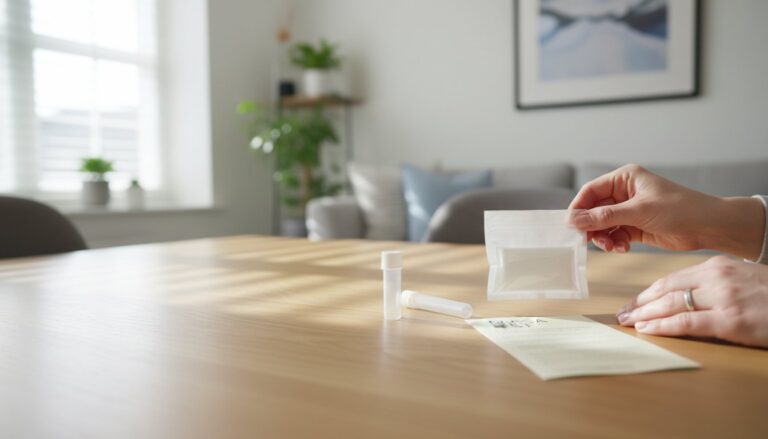
- Prepare Your Space: Begin by washing and drying your hands thoroughly to prevent any contamination.
- Collect the Sample: Carefully open the sterile swab. Following the detailed instructions, gently swab the required areas, which are typically the inside of your nostrils and/or the groin area.
- Secure the Swab: Immediately place the swab into the provided transport tube. It is vital that the tip of the swab does not touch any other surface before it is sealed in the tube.
- Seal and Label: Screw the cap on the tube tightly to ensure it is secure. Fill out the required information on the enclosed form and label the sample as instructed.
Returning Your Sample and Getting Results
Once your sample is collected and securely packaged, the final steps are just as simple. We handle the logistics so you can focus on preparing for your procedure. This final part of your mrsa screening for surgery is designed for maximum convenience.
Simply place the sealed and labelled transport tube into the prepaid, pre-addressed return packaging provided in your kit. You can then post your sample using any Royal Mail postbox. Once our UK-based laboratory receives your sample, it will be processed promptly. You will receive a confidential notification by your chosen method, either email or text, as soon as your results are ready to view securely online.
Ready to take the next step in your surgical preparation? Order your simple-to-use MRSA test kit today.
Your Final Step Towards a Safe and Successful Surgery
Undergoing a surgical procedure is a significant event, and your health and safety are the top priorities. As we’ve explored, pre-operative screening is a simple yet crucial step to prevent the risk of post-surgical infections. Understanding the straightforward testing process and your MRSA status empowers you to work with your healthcare team for the best possible outcome. This makes effective mrsa screening for surgery an indispensable part of your preparation.
For a convenient, fast, and confidential solution, our at-home test kits offer complete peace of mind. Every sample is processed in a UKAS-accredited UK laboratory, providing you with fast, reliable PCR results. With discreet packaging and a fully confidential service, you can take this important step from the comfort of your own home. Take control of your health today.
Choose your fast, reliable at-home MRSA test kit now.
By being proactive, you are investing in a smoother, safer recovery. We wish you the very best for your upcoming procedure.
Frequently Asked Questions About MRSA Screening for Surgery
Will a positive MRSA test definitely cancel my surgery?
A positive MRSA test rarely leads to a cancellation. The primary purpose of pre-operative screening is to identify MRSA carriers so that a simple decolonisation treatment can be administered. This usually involves a special body wash and nasal ointment for several days before your operation. By treating the colonisation beforehand, your surgical team significantly reduces the risk of a post-operative infection, making your procedure safer. Your hospital will provide clear instructions on the next steps.
Is the MRSA swab test painful or uncomfortable?
The MRSA swab test is a quick and painless procedure. A sterile cotton swab, similar to a cotton bud, is gently wiped inside your nostrils and sometimes on other skin areas like the groin or armpit. Most people report only a mild, tickling sensation that lasts for just a few seconds. There is no pain involved, and the entire sample collection process is completed in under a minute, whether at a clinic or using a simple at-home kit.
How long are my MRSA screening results valid for before surgery?
The validity period for MRSA screening results can vary between NHS trusts and private hospitals, but a common timeframe is around 30 days. If your surgery is delayed beyond this window, you will likely be asked to repeat the test. This ensures the information is current and accurately reflects your status closer to the operation date. Always confirm the specific requirements with your pre-operative assessment team, as their policy is the one you must follow.
Can my family catch MRSA from me if I test positive?
If you are colonised with MRSA (meaning the bacteria lives on you without causing illness), the risk to healthy family members is very low. MRSA is primarily a threat in healthcare settings or to individuals with weakened immune systems. Good hygiene practices, such as regular hand washing and not sharing personal items like towels or razors, are generally sufficient to prevent transmission. Your GP or pre-op nurse can provide further personalised advice for your peace of mind.
What should I do if my surgery is scheduled at very short notice?
When surgery is scheduled urgently, waiting for a standard test may not be feasible. This is where a private, rapid MRSA screening for surgery becomes invaluable. Our PCR rapid test option provides molecular detection with results often available in just 24 hours from the lab receiving your sample. This allows you to meet tight pre-operative deadlines without causing delays, ensuring your surgical team has the crucial information they need to proceed safely and on time.
Is at-home MRSA testing as reliable as testing in a hospital?
Yes, absolutely. Our at-home MRSA test kits are processed by the same UKAS-accredited laboratories that the NHS and private hospitals trust. The sample collection method-a simple swab-is identical. The only difference is the convenience of collecting the sample from the comfort of your home. This makes at-home testing a confidential, accurate, and reliable alternative to a clinic visit, delivering clinically-approved results you and your surgeon can depend on.
How quickly can I get results with a private MRSA test?
Our service is designed for speed and efficiency. With our MRSA PCR rapid test, you can expect results within 24 hours of your sample arriving at our UK-based partner laboratory. For the standard MRSA Culture Test, results are typically available within 2-3 working days. We ensure you receive your confidential results via a secure digital portal as soon as they are ready, helping you meet your pre-operative deadlines without unnecessary stress or delay.