How to Get Tested for MRSA in the UK: A Complete 2026 Guide
Facing an upcoming hospital procedure or simply seeking peace of mind about MRSA can feel overwhelming. The process often raises more questions than answers: Do I need a GP referral? How long will results take? What is the most discreet and convenient option? If you are looking for clear, straightforward information on how to get tested for MRSA in the UK, you have come to the right place. This guide is designed to provide the clarity you need.
In this complete 2026 guide, we will walk you through every available testing method, from standard NHS screening to private clinics and rapid at-home test kits. We will compare the process, speed, and potential costs associated with each choice, providing trusted, clinical information to help you make a confident decision. By the end, you will have a simple, step-by-step understanding of your options, empowering you to choose the right path for your health and circumstances.
Key Takeaways
- Understand the key differences between MRSA colonisation and infection to determine if you need a test for pre-operative screening or to investigate symptoms.
- This guide explains exactly how to get tested for MRSA UK, outlining your two main pathways: the NHS and private testing services.
- Compare NHS vs. private at-home tests on critical factors like cost, result speed, and convenience to decide which option is right for your situation.
- Discover the simple, step-by-step process for using a confidential at-home MRSA test kit, from ordering online to receiving your results from a UK-accredited lab.
Understanding MRSA Screening: Why and When It’s Done in the UK
Understanding why you might need an MRSA test begins with knowing what it is. Methicillin-resistant Staphylococcus aureus (MRSA) is a type of bacteria resistant to several widely used antibiotics. However, it’s important to distinguish between colonisation and infection. Many people carry MRSA on their skin or in their nose without any ill effects-this is known as ‘colonisation’ and is typically harmless. An ‘infection’ only occurs if the bacteria enter the body through a break in the skin, like a wound, and cause symptoms.
Screening is a simple, routine, and preventative step to identify colonisation before it has the chance to cause a problem. The test itself is quick and painless, usually involving a gentle swab taken from the surface of the skin, often from the nose, groin, or armpit.
Pre-operative Screening
One of the most common reasons for MRSA screening in the UK is before a planned hospital admission for surgery. This is a standard safety protocol across the NHS and private hospitals, particularly for major procedures such as joint replacements or heart surgery. Identifying MRSA colonisation beforehand allows medical staff to take simple, effective precautions to significantly reduce the risk of a post-operative infection, helping to ensure a safer and smoother recovery.
Investigating a Possible Infection
Your GP may recommend an MRSA test if you have symptoms of a persistent or recurring skin infection. This could include boils, abscesses, or a wound that is red, swollen, and not healing as expected. It is crucial to seek professional medical advice for any concerning skin condition. This diagnostic test is different from routine screening; instead of swabbing healthy skin, a sample is taken directly from the infected area to identify the specific bacteria causing the issue and guide the correct antibiotic treatment.
Whether for pre-operative safety, investigating symptoms, or simply for personal peace of mind, knowing how to get tested for MRSA UK-wide is the first step towards managing your health proactively. The process is designed to be straightforward, confidential, and focused on prevention.
Pathway 1: How to Get Tested for MRSA Through the NHS
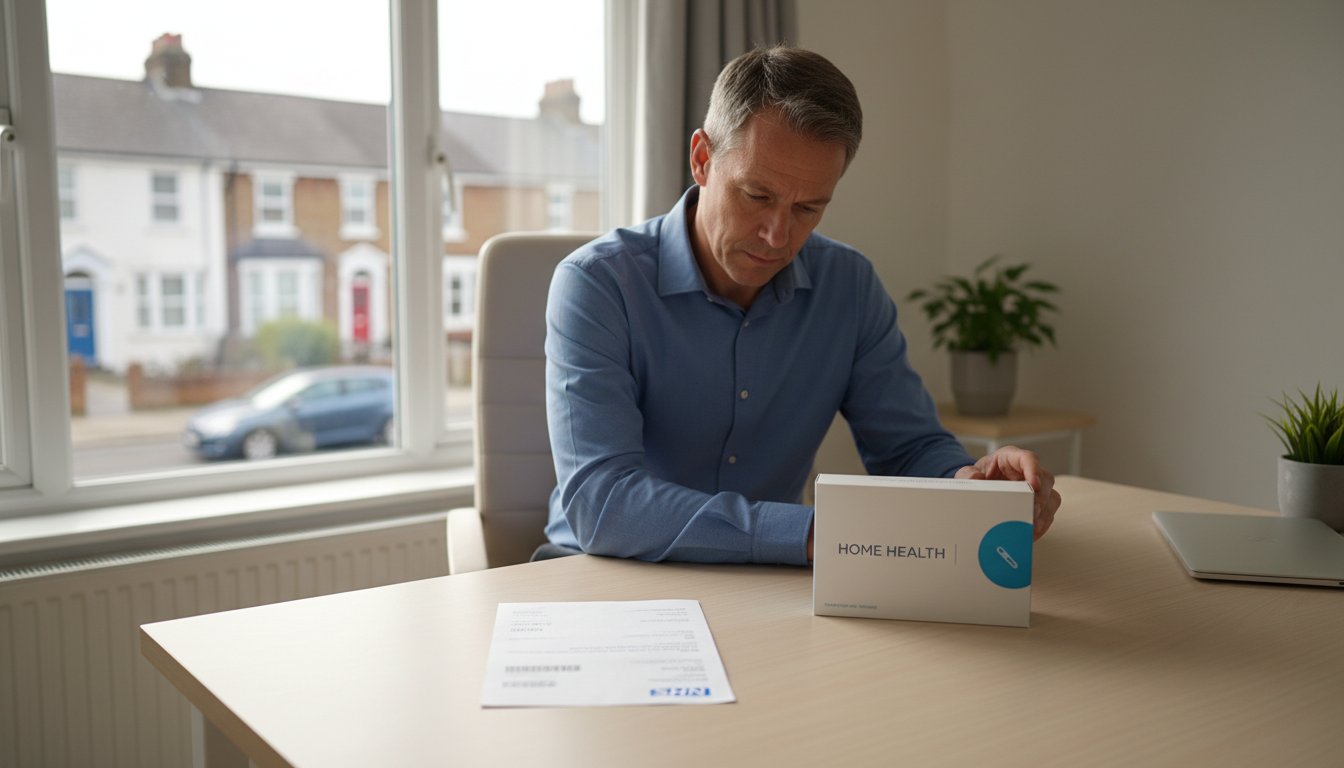
For many individuals in the UK, the National Health Service (NHS) is the primary route for medical testing. If you need to be screened for MRSA, this is often done for specific clinical reasons rather than routine checks. Understanding how to get tested for MRSA UK through the NHS involves two main scenarios, both of which are provided free of charge at the point of care.
This pathway is typically for individuals who are scheduled for a hospital procedure or are actively showing symptoms of an infection. Results are usually available within a few days, though this can vary depending on the specific hospital’s laboratory turnaround times. It is a trusted and clinically robust process designed to protect patients and prevent the spread of infection within healthcare settings.
The Hospital Pre-Assessment Process
The most common reason for an NHS MRSA test is as part of a pre-operative assessment before a planned hospital admission, particularly for surgery. During this appointment, a nurse will carry out a routine screening. The process is simple and painless:
- A sterile cotton swab is used to gently wipe the inside of your nostrils.
- Additional swabs may be taken from your groin, armpit, or any open wounds or sores.
These samples are sent to the hospital’s laboratory for analysis. The purpose is to identify if you are carrying MRSA on your skin without any symptoms (known as colonisation) so that preventative treatment can be given before your operation. You will be contacted with your results before your surgery date. If the test is positive, the hospital will provide a special skin and nasal treatment to use at home.
Visiting Your GP for a Test
It is less common to be tested for MRSA by your GP, as this is generally reserved for patients who are symptomatic. You might be offered a test if you have a recurring skin infection, such as a boil or abscess, or a wound that is not healing and is suspected to be infected with MRSA. If you have symptoms that concern you, you can find detailed descriptions in the official NHS information on MRSA to help guide your conversation with your doctor.
If your GP determines a test is necessary, a nurse will take a swab from the affected area. The sample is sent away for laboratory testing, and the GP surgery will contact you directly with the results and discuss the next steps for treatment if required.
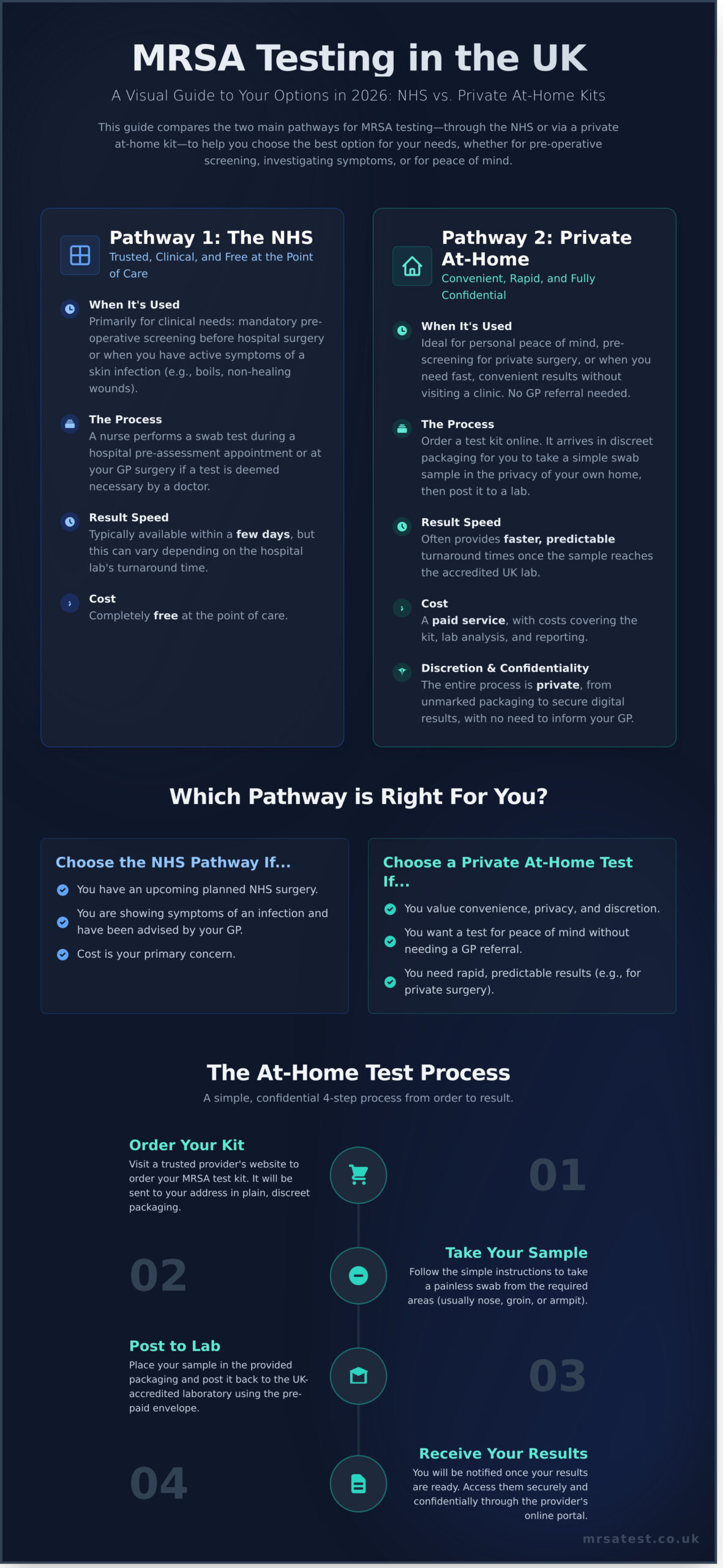
Pathway 2: Your Guide to Private MRSA Testing Options
While the NHS provides excellent care and clear guidance on how to get tested for MRSA through the NHS, particularly before a planned hospital stay, this pathway isn’t suitable for everyone. Private testing offers a confidential and efficient alternative for those who need faster results, require screening for occupational reasons, or simply seek peace of mind without needing to consult a GP.
The primary benefits of choosing a private route are speed and accessibility. You can get tested without a doctor’s referral and often receive your results much faster than standard NHS turnaround times. There are two main private pathways available in the UK.
Private Clinics and Hospitals
Some private hospitals and clinics offer MRSA screening as a standalone service. This option involves booking and attending an in-person appointment where a clinician will take your samples for you. It is a suitable choice if you prefer a face-to-face consultation with a healthcare professional. However, this is typically the most expensive private option and requires you to travel to the clinic’s location.
For those in the London area, arranging reliable transport to and from these appointments is crucial, and you can learn more about EC Minibus for private and shared options.
At-Home MRSA Test Kits: The Modern Approach
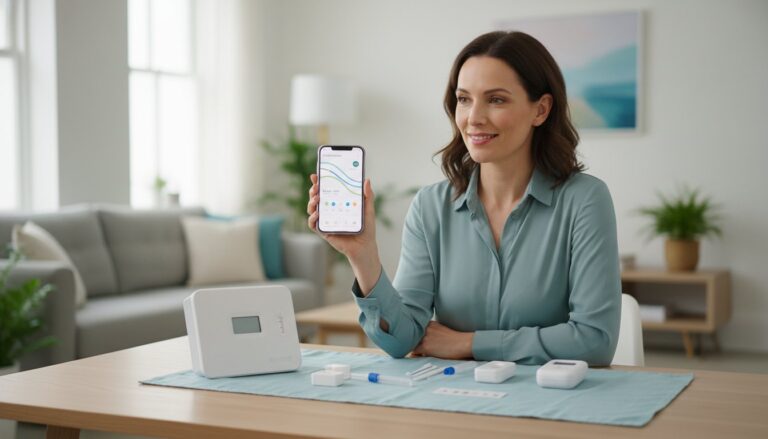
For ultimate convenience and discretion, at-home test kits are the most accessible private solution for how to get tested for MRSA UK-wide. The process is designed to be simple, secure, and completed entirely from the comfort of your own home.
You simply order a kit online, which arrives in discreet packaging. Inside, you will find sterile swabs and clear instructions to collect your own samples. Once collected, you post the samples to a certified UK laboratory using the pre-paid return packaging provided. The key benefits include:
- Complete Confidentiality: No appointments or face-to-face consultations are necessary.
- Unmatched Convenience: Test at a time that suits you without leaving your home.
- Fast and Accurate Results: Samples are processed at UKAS-accredited labs for clinical accuracy.
Two types of at-home tests are generally available:
- Standard MRSA Culture Test: This is the traditional laboratory method that cultures the sample to see if MRSA bacteria grow. Results are typically available in 2-3 days.
- Rapid MRSA PCR Test: This advanced molecular test detects the specific DNA of the MRSA bacteria, offering a much faster result, often within 24 hours of the lab receiving your sample.
NHS vs. Private At-Home Test: Which is Right For You in 2026?
When considering how to get tested for MRSA UK-wide, you have two primary pathways: the NHS and private at-home testing kits. Both provide accurate, reliable results from accredited laboratories, but they differ significantly in cost, speed, and convenience. Understanding these differences is key to choosing the right option for your specific circumstances.
To help you decide, here is a clear comparison of the two approaches:
| Feature | NHS Pathway | Private At-Home Kit |
|---|---|---|
| Cost | Free at the point of use. | A paid service (typically £40 – £80). |
| Speed of Results | Typically 2-5 working days. | Fast results, often within 24-72 hours of lab receipt. |
| Convenience | Requires a scheduled GP or hospital appointment. | Simple sample collection from the comfort of your home. |
| Access | Requires a clinical referral from a GP or hospital. | Order online at any time, no referral needed. |
| Privacy | Results are added to your permanent NHS medical record. | Confidential results are sent directly and securely to you. |
Your decision will ultimately depend on your personal priorities. If you have an upcoming surgery with a strict deadline, the speed and direct access of a private test may be essential. However, if the test is part of routine pre-operative screening managed by your hospital, the NHS pathway is the standard and most appropriate route.
When to Choose the NHS Pathway
- It’s the ideal choice if you have a scheduled surgery and the hospital is already managing your MRSA screening process.
- This is the correct route if your GP has recommended a test for specific clinical reasons, such as investigating a persistent infection.
- It is the best option if cost is your single most important factor, as testing is free at the point of use.
When a Private At-Home Kit is a Better Fit
- Perfect if you need results quickly for an imminent or short-notice medical procedure to avoid delays.
- Ideal for confidential, peace-of-mind screening without needing to consult your GP or have the result on your medical record.
- The best choice if you value convenience, privacy, and complete control over the testing process. You can order a trusted MRSA test kit directly to your door.
The At-Home MRSA Test Process: A Step-by-Step Guide
For those wondering how to get tested for MRSA UK without the need for a clinic visit, the at-home screening process offers a confidential, simple, and clinically-robust solution. We have streamlined every stage to ensure your experience is as straightforward and stress-free as possible. From ordering to receiving your results, you are in complete control.
The entire process is designed for your convenience and peace of mind. Here is a clear breakdown of what to expect:
- Step 1: Order Your Kit Online. Place your order through our secure website. We offer different options, including standard culture tests and rapid PCR tests, to suit your specific needs and timeline.
- Step 2: Receive Your Discreet Kit. Your test kit will arrive in plain, unbranded packaging, typically the next working day. We prioritise your privacy at every step.
- Step 3: Collect Your Sample. Inside the kit, you will find sterile swabs and simple, easy-to-follow instructions. The collection process takes only a few minutes.
- Step 4: Post Your Sample. Place your collected sample into the provided postage-paid, tracked return envelope and post it back to our fully accredited UK laboratory.
This kind of streamlined digital process is a great example of how modern services can offer clarity and convenience. For businesses aiming to build a similarly effective online presence, you can learn more about AHS Digital and their creative services.
Collecting Your Sample Correctly
Your kit contains everything you need to collect a viable sample for analysis. The process is quick, entirely painless, and involves taking swabs from specific areas where MRSA bacteria are most commonly found. You will be instructed to gently rotate a sterile swab inside both nostrils and then use another swab for the skin, typically the groin or armpit (axilla). Following the included instructions precisely is vital for ensuring an accurate and reliable result.
Receiving and Understanding Your Results
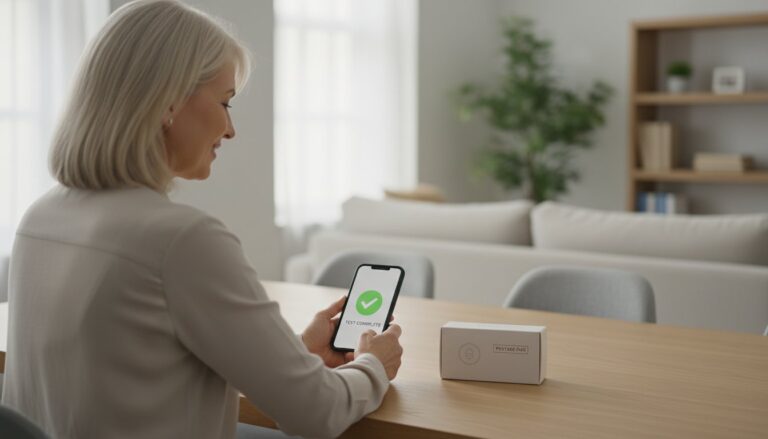
Once our laboratory has processed your sample, your results will be delivered to you securely and confidentially via email or our online portal. The report is clear and easy to understand:
- A negative result means that MRSA was not detected in your sample.
- A positive result indicates that MRSA bacteria were found, meaning you are ‘colonised’. This is not an active infection but is important information for your healthcare provider.
If you receive a positive result, the recommended next step is to share the report with your GP or surgeon. They will advise on the appropriate management plan, which may involve a course of decolonisation treatment before any planned surgery. Ready to take the next step? Order your confidential, UKAS-accredited MRSA test kit today.
Taking Control: Your Next Step in MRSA Screening
As we’ve detailed, you have clear and accessible pathways for MRSA testing in the UK. Whether you go through the NHS for specific medical procedures or opt for a private test for personal assurance, the most important factor is making an informed choice that suits your circumstances and provides peace of mind.
Understanding how to get tested for mrsa uk is simpler than ever, and for those who value speed and privacy, an at-home test is the definitive modern solution. Our service is designed to remove uncertainty, delivering a clinically reliable process from the comfort of your home. We are a 100% UK-based company, processing all samples in a professional, UKAS-accredited laboratory to ensure accuracy you can trust.
With discreet next-day delivery and confidential results available in as little as 24 hours, you can get the clarity you need without delay. Take control of your health with confidence. Choose your fast, reliable at-home MRSA test kit.
Frequently Asked Questions
Do I need a GP referral to get an MRSA test in the UK?
For an NHS test, a referral from a GP or hospital consultant is typically required, often as part of pre-operative screening. However, you do not need a GP referral to use a private service. You can order a confidential at-home MRSA test kit directly online, providing a convenient and discreet alternative for personal peace of mind or to meet specific screening requirements.
How long do MRSA test results usually take?
The turnaround time for results depends on the type of test. A standard MRSA culture test processed by the NHS or a private lab typically takes 2 to 3 days. For faster results, private services often provide a rapid PCR test option, which can deliver a conclusive result within 24 hours of the sample arriving at the laboratory, ensuring you get the information you need quickly.
Is MRSA screening mandatory before all surgery in the UK?
While not mandatory for every single procedure, MRSA screening is a standard and crucial part of pre-operative care for many types of planned (elective) surgery in the UK. It is especially common for higher-risk operations, such as joint replacements, heart surgery, and other major implants. This routine screening helps hospitals proactively manage and reduce the risk of post-surgical infections, ensuring patient safety is the top priority.
What should I do if my pre-op MRSA test is positive?
Receiving a positive result is not a cause for alarm, and your surgery will almost certainly proceed as scheduled. Your healthcare team will provide you with a simple decolonisation treatment to use for a few days before your hospital admission. This usually involves a special antiseptic body wash and a nasal ointment to clear the bacteria from your body, significantly lowering the risk of infection during your procedure.
Managing the emotional side of this process is just as important. For those looking to support their mental well-being naturally during this period of preparation and recovery, resources like Mental Compass provide functional mushroom and flower essence tinctures designed to promote calm and balance.
Creating a clean, comfortable, and stress-free environment is key for a smooth recovery. Ensure you have meals prepared, your living space is easy to navigate, and your bed is a restful sanctuary. Using fresh, high-quality bedding can make a significant difference to your comfort. For those looking to create a more restorative space, a hotel quality bed linen supplier UK can offer options that enhance comfort and hygiene during your recuperation.
How can I prepare for a comfortable recovery at home after my procedure?
Is it possible to test for MRSA at home?
Yes, testing for MRSA at home is a simple and reliable process. At-home kits contain everything you need, including sterile swabs and clear instructions, to collect a sample from the comfort of your home. For anyone wondering how to get tested for mrsa uk-wide without visiting a clinic, these kits offer a completely confidential and highly convenient solution. Your sample is then sent to an accredited lab for analysis.
How accurate are at-home MRSA test kits?
When processed by a fully accredited laboratory, at-home MRSA test kits are just as accurate as tests conducted in a hospital or GP surgery. The quality of the result depends on the laboratory’s standards, not where the sample is collected. Our kits are analysed in a UKAS-accredited facility, ensuring you receive a clinically reliable result you can trust, based on the same high standards as the NHS.
How much does a private MRSA test cost in the UK?
The cost of a private MRSA test in the UK typically falls between £40 and £80. The final price often depends on the type of test-a standard culture test is generally more affordable, while a rapid PCR test with a faster turnaround time may be at the higher end of the range. This fee usually covers the complete service: the test kit, all postage, and the laboratory analysis.