
How to Avoid Hospital-Acquired Infections: A Proactive Patient Guide for 2026
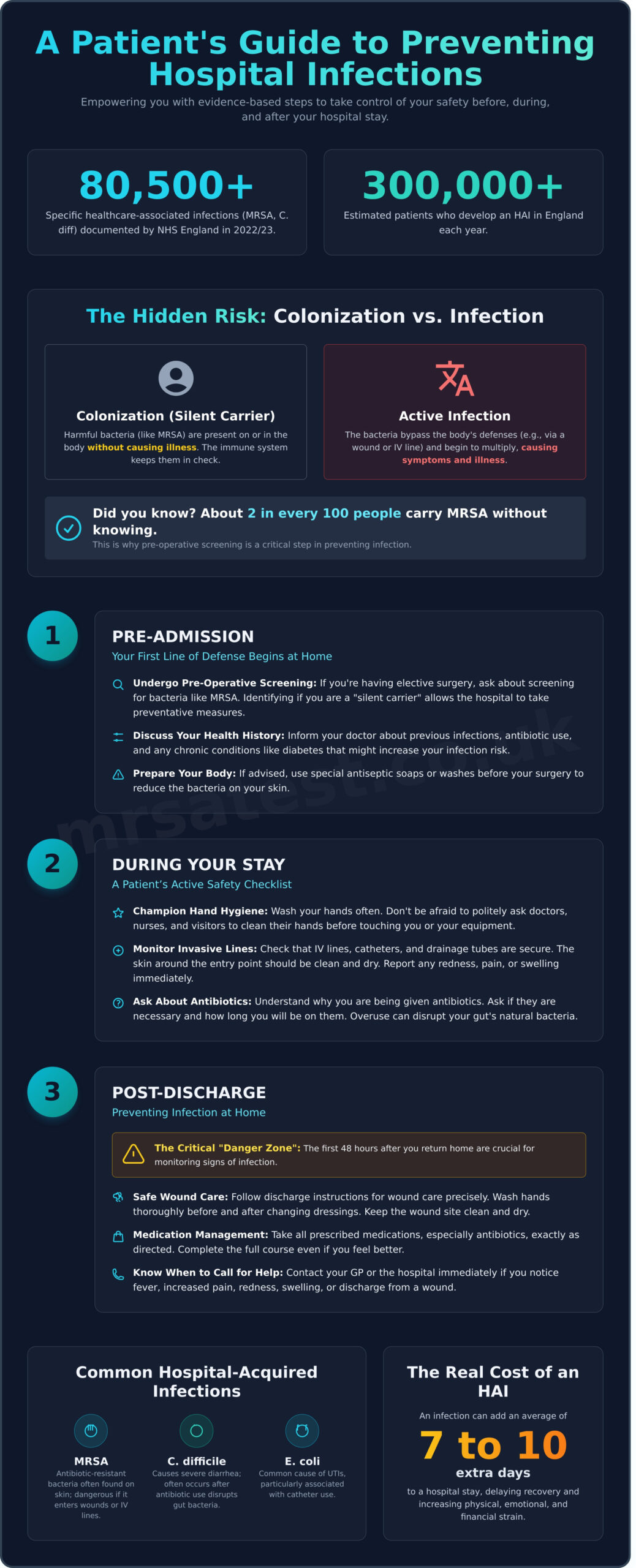
In the 2022/23 reporting year, NHS England documented over 80,500 cases of specific healthcare-associated infections like MRSA and C. difficile. It’s completely understandable why the prospect of a hospital stay can bring a wave of anxiety, especially with concerns about post-surgical complications or antibiotic-resistant bacteria. In a clinical environment, it’s easy to feel that your personal safety is entirely out of your hands.
This guide is designed to put control back where it belongs: with you. We’ll provide you with the essential, evidence-based knowledge on how to avoid hospital acquired infections, transforming apprehension into confident action. You will discover a clear checklist of proactive steps you can take before, during, and after your stay, empowering you to become an informed advocate for your own well-being.
Key Takeaways
- Discover why your preparation for a hospital stay should begin at home, including the crucial role of pre-operative screening for elective surgeries.
- To understand how to avoid hospital acquired infections, it is essential to first learn the clinical difference between bacterial colonization and an active infection.
- Learn a simple patient safety checklist to actively monitor your care, from personal hand hygiene to checking the security of IV lines and catheters.
- Recognise the critical “danger zone” in the first 48 hours post-discharge and learn clear steps for safe medication and wound management at home.
What are Healthcare-Associated Infections (HAIs)?
A hospital stay is intended to help you heal, but it can also expose you to new health risks. Understanding these risks is the first crucial step in learning how to avoid hospital acquired infections. A Healthcare-Associated Infection, or HAI, is an infection you acquire while receiving treatment for another condition in a healthcare setting. According to the UK Health Security Agency, it’s estimated that over 300,000 patients develop an HAI in England each year. This makes infection prevention and control a top priority for the NHS heading into 2026, with a continued focus on patient safety and antimicrobial stewardship. The fundamental definition of What are Healthcare-Associated Infections (HAIs)? highlights that these are not the original reason for a patient’s admission.
To empower patients and healthcare providers, a clear framework is essential. We use the PIER approach to structure our guidance:
- Prevention: Proactive steps you can take to minimise your risk.
- Identification: Recognising the early signs and symptoms of a potential infection.
- Escalation: Knowing who to speak to and how to raise concerns effectively.
- Response: Understanding the treatment and management process if an infection occurs.
While many different microorganisms can cause HAIs, a few are particularly common in UK hospitals. Being aware of them helps you understand the importance of screening and hygiene protocols. The most prevalent culprits include:
- MRSA (Methicillin-resistant Staphylococcus aureus): A type of bacteria that is resistant to several widely used antibiotics. It can live harmlessly on the skin but may cause serious infections if it enters the body through a break in the skin, such as a surgical wound or IV line.
- Clostridioides difficile (C. difficile or C. diff): This bacterium can cause severe diarrhoea and colitis. It often affects patients after a course of antibiotics disrupts the natural balance of bacteria in the gut.
- Escherichia coli (E. coli): While a common gut bacterium, certain strains can cause serious infections, particularly urinary tract infections (UTIs) associated with catheter use.
Why Hospitals are High-Risk Environments
Hospitals concentrate a high number of individuals with weakened immune systems, making them more susceptible to infection. Invasive procedures, while often necessary for treatment, create direct entry points for bacteria. Catheters, IV lines, ventilators, and surgical incisions can all bypass the body’s natural defences. This environment also fosters the development of “superbugs” as frequent antibiotic use creates pressure for bacteria to evolve and develop resistance, making infections harder to treat.
The Real Cost of an Infection
An HAI can significantly delay your recovery, adding an average of 7 to 10 days to a hospital stay. This prolonged period of illness takes a physical and emotional toll, and it creates a financial strain on families through lost wages and increased travel costs. It’s vital to remember that an HAI is a manageable risk, not an inevitable outcome of a hospital stay.
Colonization vs. Infection: The Hidden Risk
To understand how to avoid hospital acquired infections, it’s crucial to first grasp the difference between carrying bacteria and being sick with them. Your body is home to trillions of microorganisms, a complex community known as your microbiome. Most of these bacteria are harmless, and many are even beneficial. They live on your skin, in your gut, and in your nasal passages, forming a natural part of your body’s ecosystem.
Sometimes, this microbiome can include potentially harmful bacteria, such as Methicillin-resistant Staphylococcus aureus (MRSA). When you carry a pathogen like MRSA without showing any symptoms of illness, it’s called “colonization.” The bacteria are present, but your immune system is keeping them in check. The danger arises when this delicate balance is disturbed. During a hospital stay, particularly for surgery, a harmless colonizer can become a dangerous invader. An incision, an IV line, or a catheter can provide a direct route for these bacteria to enter your bloodstream or deep tissues, causing what is known as an “endogenous infection”-an infection that originates from your own bacteria.
The Silent Carrier Phenomenon
It’s a surprising fact that a significant portion of the population carries potentially harmful bacteria without any awareness. For instance, according to data from the US Centers for Disease Control and Prevention (CDC), about two in every 100 people carry MRSA in their nose, usually without any ill effects. These individuals are silent carriers. In a hospital setting, this presents a clear risk. A carrier can unknowingly transfer bacteria to bed rails, remote controls, and other shared surfaces, creating a risk of cross-contamination to other vulnerable patients. This is why pre-surgical screening is so vital. By identifying carriers before they enter a sterile environment like an operating theatre, hospitals can take proactive steps. For those seeking complete peace of mind or preparing for a procedure, you can arrange for a private MRSA test from home, ensuring you have all the information you need.
Breaking the Chain of Transmission
Hospitals are highly focused on preventing the spread of bacteria. Healthcare professionals are trained to follow strict hygiene protocols, summarised by the World Health Organisation’s “Five Moments for Hand Hygiene.” This includes cleaning their hands:
- Before touching a patient.
- Before a clean or aseptic procedure.
- After risk of exposure to body fluids.
- After touching a patient.
- After touching a patient’s surroundings.
These steps are designed to break the chain of transmission. However, the risk from your own colonizing bacteria remains. When a surgeon makes an incision, the skin’s protective barrier is breached. Any MRSA living on your skin can then easily migrate into the surgical wound, leading to a serious infection. To mitigate this specific risk, patients who test positive for MRSA colonization are often prescribed a pre-operative decolonisation treatment. This typically involves using a special antiseptic body wash and a nasal ointment for several days before the operation to significantly reduce the amount of bacteria on your skin. Patients also have a role to play in their own safety; familiarising yourself with A Patient’s Safety Checklist can empower you to be an active participant in your care.
Pre-Admission: Your First Line of Defense
Successfully preventing an infection begins long before you walk through the hospital doors. While hospital staff are rigorously trained in hygiene protocols, your preparation is a critical and often overlooked component. Waiting until admission day to think about prevention means you’ve missed your best opportunity to take control. A proactive approach, focusing on screening and personal hygiene, is fundamental to how to avoid hospital acquired infections and ensure a smoother, safer recovery.
The Importance of MRSA Screening
MRSA (Methicillin-resistant Staphylococcus aureus) is a type of bacteria that can live harmlessly on the skin of about 1 in 30 people. If it enters the body through a break in the skin, like a surgical incision, it can cause a serious infection. Because of this risk, the NHS routinely screens patients scheduled for high-risk elective procedures, such as joint replacements or heart surgery. This precaution is vital.
For patients seeking faster results or complete peace of mind, a private, at-home screening offers a confidential and convenient alternative. Knowing your MRSA status well in advance allows for any necessary decolonisation treatments to be completed without delaying your procedure. For a detailed look at the process, our guide on Understanding MRSA Screening Before Surgery provides all the essential information. You can test for MRSA from the comfort of your own home, giving you control over your health timeline.
When choosing a test, you have two primary, clinically-approved options. A traditional MRSA Culture Test identifies the bacteria by growing it in our UKAS-accredited lab, with results typically available in 2-3 days. For more urgent needs, the MRSA PCR rapid test offers molecular detection, providing a definitive result within 24 hours of the sample reaching our 100% UK-based partner laboratory.
Body Preparation and Hygiene
Preparing your body correctly is just as important as screening. Your surgical team may provide a 4% chlorhexidine gluconate (CHG) antiseptic skin cleanser and instruct you to use it for several days before your operation. Using it correctly is key to reducing the bacterial load on your skin.
- Start 3-5 days before surgery: Follow the specific timeline provided by your clinical team.
- Wash from the neck down: Lather the CHG wash for at least one minute, paying special attention to the area around your planned surgical site. Avoid contact with your eyes, ears, and mouth.
- Use clean towels: After each wash, pat yourself dry with a fresh, clean towel to prevent re-introducing bacteria to your skin.
Maintaining skin integrity is also crucial. In the weeks before your admission, avoid any activity that could cause cuts, scrapes, or rashes, especially near the surgical area. Postpone any new tattoos or piercings until you are fully recovered.
Part of maintaining skin integrity involves understanding what treatments are safe and beneficial. While new piercings or tattoos should be avoided, professional skin care treatments can help ensure your skin is in optimal condition. For those interested in aesthetic services that operate with medical-grade hygiene standards, you can check out Organic Skin & Body Med Spa as an example of a facility that prioritizes client safety.
Crucially, do not shave the surgical site yourself. Shaving with a razor creates microscopic cuts in the skin that can become entry points for infection-causing bacteria. If any hair removal is necessary, the clinical team will use sterile, single-use electric clippers right before your procedure, which is a far safer method.
Preparing Your Home for Recovery
Your pre-admission strategy extends to your home environment. A clean, organised space is essential for a safe post-surgical recovery. Before you leave for the hospital, ensure you have fresh, clean bedding, and place everyday items like your phone, remote controls, and medications within easy reach of where you’ll be resting. Preparing simple, nutritious meals in advance can also reduce stress and help you focus on healing. These simple steps are a powerful part of your overall plan for how to avoid hospital acquired infections after you’ve been discharged.
This is also a good time to ensure you have plenty of fresh, clean linens for your return. High-quality cotton bedding and towels are not only comfortable but also durable enough for the frequent washing that may be required during recovery. If you’re looking for new supplies, you can visit King of Cotton.
During Your Stay: A Patient’s Safety Checklist
Once admitted, you become the most important member of your own safety team. Being an active, informed participant in your care is a proven strategy for how to avoid hospital acquired infections (HCAIs). Your vigilance, combined with the hospital’s protocols, creates a powerful defence against harmful bacteria like MRSA. This checklist provides simple, effective actions you can take to protect yourself throughout your hospital stay.
Your primary responsibilities can be broken down into five key areas of focus:
- Maintain Rigorous Hand Hygiene: This is your single most effective tool. Wash your hands with soap and water for at least 20 seconds, especially after using the toilet and before eating. Use the alcohol-based hand gel provided at your bedside frequently, particularly after touching surfaces like your phone, the remote control, or bed rails.
- Monitor Your Medical Devices: If you have an IV line, cannula, or urinary catheter, check it daily. Look for signs of trouble at the insertion site, such as new redness, swelling, or pain. The dressing should be clean, dry, and securely attached. If anything looks amiss, alert a nurse immediately.
- Advocate for Cleanliness: You have the right to receive care in a safe, clean environment. This includes expecting everyone who enters your room to have clean hands. Don’t be afraid to speak up.
- Keep Your Bedside Area Tidy: A cluttered overbed table or floor prevents cleaning staff from doing their job effectively. Keep your personal items organised and stored in the provided drawers to allow for thorough daily disinfection of all surfaces.
- Identify Early Warning Signs: Be attuned to your body. Report any new or worsening symptoms to your nurse, such as a fever, chills, or unusual pain, redness, or discharge from a surgical wound or IV site. Early detection is critical.
Communicating with Healthcare Staff
Speaking up can feel daunting, but your healthcare team expects and encourages it. A simple, polite question can make a significant difference. Try scripting your request in advance: “Excuse me, I’m trying to be extra careful about infections. Would you mind using the hand gel before we begin?” This approach is collaborative, not confrontational. Similarly, asking “Do I still need this catheter today?” is a valid and important question that prompts a clinical review and helps reduce your risk.
Managing Visitors and Environment
Your visitors play a role in your safety. Politely insist that friends and family do not visit if they have any signs of illness, such as a cough, cold, or stomach upset. Ask them to clean their hands upon entering and leaving your room. The NHS “Bare Below the Elbows” policy, which requires staff to have short sleeves and no wrist jewellery, is designed to improve hand hygiene. Encouraging visitors to roll up their sleeves helps maintain this standard of care. If you notice a spill or a dusty surface, use your call bell to report it promptly.
Taking these proactive steps is fundamental to how to avoid hospital acquired infections. Proactive screening is another layer of protection. For complete peace of mind before a planned admission, consider our confidential at-home MRSA test kit.
Post-Discharge: Preventing Infection at Home
Your journey to recovery doesn’t end when you walk out of the hospital doors. The first 48 hours at home are a critical period, often called the “danger zone,” where your body is still vulnerable. During this time, your immune system is recovering from the stress of a procedure or illness, making you more susceptible to infection. Vigilance during this transition is a crucial part of how to avoid hospital acquired infections from developing after you’ve been discharged. Your home environment, while familiar, isn’t sterile like a clinical setting, so taking proactive steps is your best defence.
Your discharge papers are more than just a formality; they are your personalised roadmap to a safe recovery. Follow every instruction precisely. If you were prescribed a course of antibiotics, you must complete the entire course, even if you begin to feel better after a few days. Stopping early can allow surviving bacteria to multiply and develop resistance. Similarly, adhere strictly to the guidelines for wound management, medication schedules, and any activity restrictions. These instructions are designed to support your body’s natural healing process and minimise risk.
Wound Care and Monitoring
For surgical incisions, the golden rule is “look, but don’t touch.” Keep the area clean and dry as instructed by your care team. Daily visual checks are essential to spot early signs of trouble. It’s vital to distinguish between normal healing and the first signs of an infection. Contact your GP or call NHS 111 immediately if you notice:
- A fever with a temperature of 38°C or higher.
- Pus or any unusual, foul-smelling discharge from the wound.
- Increasing pain, swelling, or tenderness around the incision.
- Redness that spreads away from the wound edges. A spreading rash can be a sign of a serious skin infection. If you’re concerned, it can be helpful to understand what to look for. Learn more by reading: Is This Rash MRSA?
Closing the Loop with At-Home Testing
Even after successful treatment in hospital, you may have been exposed to bacteria like MRSA. Sometimes, these bacteria can remain on the skin without causing illness, a state known as colonisation. Post-treatment screening provides the final, crucial piece of reassurance that you are clear of any lingering bacteria. This simple step is fundamental to how to avoid hospital acquired infections from impacting your family. At-home testing kits offer a simple, discreet, and accurate way to confirm your status from the comfort of your own home, providing peace of mind for you and your loved ones. Order your confidential MRSA test kit today to ensure your recovery is fully on the right track.
Take Control: Your Final Step in Hospital Safety Preparation
Your health is your greatest asset. Being a proactive patient is the most effective strategy for a safe hospital experience, from pre-admission preparations to diligent in-stay hygiene. The ultimate answer to how to avoid hospital acquired infections lies in this blend of knowledge and proactive steps, especially when it comes to understanding hidden risks like MRSA colonization.
Don’t leave your pre-operative safety to chance. Knowing your MRSA status empowers both you and your clinical team. Secure your peace of mind with a private at-home MRSA test kit. Our service offers clinical-grade PCR and Culture testing options, with fast results delivered from our 100% UK-based, UKAS-accredited laboratories. Your test arrives in discreet, plain packaging for total privacy, giving you confidential results from the comfort of your own home.
Taking this simple step ensures you walk into the hospital not with anxiety, but with the confidence of being fully prepared.
Frequently Asked Questions
Is it possible to completely avoid infections in a hospital?
No, it’s not possible to completely eliminate all risk of infection in a hospital, but you can significantly reduce your chances. Hospitals are environments where germs are present, but you are your own best advocate. According to the NHS, at least 20% of healthcare-associated infections are preventable through improved hygiene. Diligent hand washing and ensuring your care team does the same are your most effective tools.
Can I get MRSA even if I am a healthy person?
Yes, healthy individuals can carry MRSA on their skin without any signs of illness, a state known as colonisation. Data from the UK Health Security Agency suggests around 1 in 30 people carry the bacteria harmlessly. The risk arises if MRSA enters the body through a break in the skin, such as a surgical incision. This is why pre-operative screening is a critical safety measure before many procedures.
How do I ask a doctor or nurse if they have washed their hands?
You can ask directly and politely by saying, “I’m feeling a bit anxious about infections, would you mind washing your hands before we start?” Healthcare staff are trained to expect this and should respond positively. It’s your right to ask for your own safety. This simple act is a key step in learning how to avoid hospital acquired infections and being an active partner in your care.
What are the first signs of a hospital-acquired infection?
The first signs often appear locally, around a surgical wound or IV line. Look for increased redness, swelling, pain, or any discharge, especially if it’s yellow, green, or has a foul odour. You might also develop a fever, with a temperature of 38°C or higher, or experience chills and a general feeling of being unwell. Report any of these symptoms to your nurse immediately for prompt assessment.
Is MRSA screening mandatory before every surgery in the UK?
No, MRSA screening isn’t mandatory for every procedure in the UK, but it is standard NHS practice for many planned operations. It is strongly recommended for high-risk elective surgeries, including orthopaedic procedures like hip and knee replacements, and most cardiac surgeries. Your individual hospital trust will have a specific policy, so you should ask your pre-op assessment team if you will be screened.
How long does it take to get results from an at-home MRSA test?
The turnaround time for an at-home MRSA test result depends on the specific test you use. Our standard MRSA Culture Test provides a result within 2-3 working days after your sample arrives at our UKAS-accredited laboratory. For a faster option, the MRSA PCR rapid test delivers a definitive result within 24 hours of the lab receiving your sample, offering you peace of mind with minimal waiting.
What happens if my pre-op MRSA test comes back positive?
If your pre-operative MRSA test is positive, your surgery will almost certainly still go ahead as scheduled. A positive result simply means you are carrying the bacteria. Your doctor will prescribe a simple decolonisation treatment, typically an antiseptic body wash and a nasal ointment to use for five days before your admission. This protocol is highly effective at reducing infection risk.
Are visitors allowed to touch patients after surgery?
Yes, visitors can usually touch patients, but they must adhere to strict hand hygiene protocols. Every visitor should clean their hands with alcohol gel or soap and water when they enter and leave your room. They should not touch your wound, dressing, or any medical equipment like catheters or drips. Enforcing these rules is a vital part of how to avoid hospital acquired infections during your recovery.