At-Home Test Kits UK: The Complete Guide for 2026
Taking control of your health has never been more accessible, yet the world of at-home health testing can feel overwhelming. Are the results accurate? Is my data confidential? With a vast market for at home test kits uk residents can choose from, it’s easy to feel uncertain about where to start or which service to trust. These questions are valid, and finding clear, professional guidance from trusted sources like mrsatest.co.uk is the first step toward making a confident decision for your well-being.
This comprehensive 2026 guide is designed to provide that clarity. We will walk you through the entire process, from understanding how these tests are validated to what you can screen for from the comfort of your home. You will learn how to select a reliable and accurate kit for your specific health concerns, what to expect when your results arrive, and the appropriate next steps to take. Our goal is to empower you with the knowledge to manage your health proactively and with complete peace of mind.
Key Takeaways
- Learn the confidential, step-by-step process of using a home test kit, from discreet delivery to receiving your secure results.
- Identify the right test category for your needs, from hormone and vitamin levels to sexual health and general wellness screening.
- Understand the key factors that determine accuracy, helping you choose reliable at home test kits uk that use accredited UK laboratories.
- Follow a simple 5-step checklist to confidently select the most appropriate and trustworthy test kit for your personal health goals.
How Do At-Home Health Test Kits Work? The Process Explained
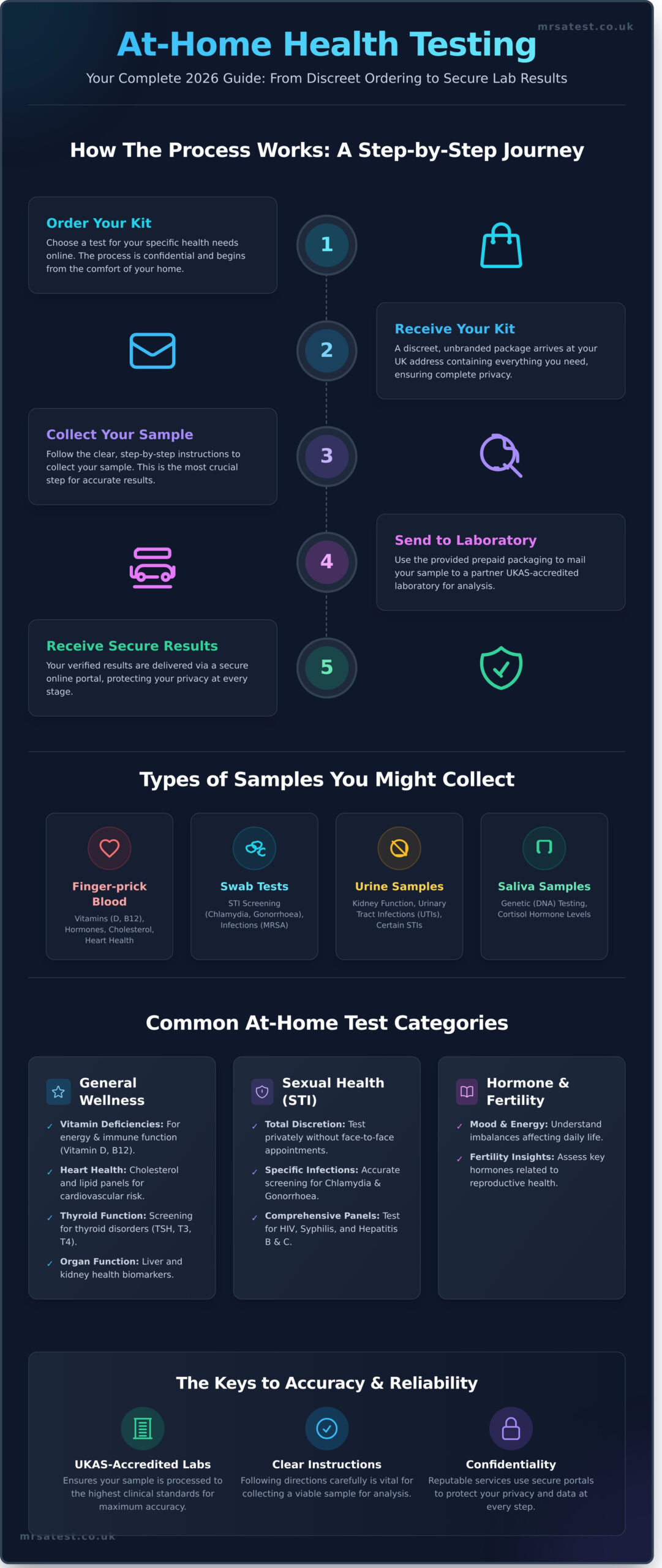
At-home health testing operates on a simple, direct-to-consumer model designed for convenience and privacy. The process begins when you order a kit online for a specific health marker, such as vitamin levels or infection screening. Within a few days, a discreet, unbranded package arrives at your UK address, containing everything you need to collect your sample from the comfort of your own home. This approach empowers you to take a proactive role in managing your health on your own schedule.
The accuracy of any test depends on the quality of the sample. Each kit includes clear, step-by-step instructions to guide you. Following these directions carefully is the most important step you will take, ensuring the laboratory receives a viable sample for analysis. Whether it’s a simple swab or a finger-prick blood test, the kits are designed to be user-friendly and safe.
Types of Samples You Might Collect
The type of sample required depends entirely on what is being tested. The most common collection methods used by at home test kits UK providers are minimally invasive and straightforward to perform:
- Finger-prick blood tests: A small lancet is used to collect a few drops of blood. This is standard for checking vitamin deficiencies (like Vitamin D or B12), hormone levels, and cholesterol.
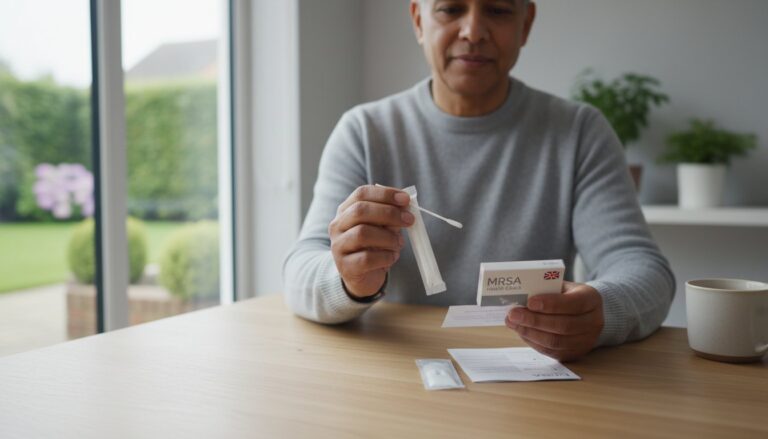
- Swab tests: A sterile swab is used to collect cells from a specific area, such as the throat, nose, or genital area. This is common for STI screening and identifying infections like MRSA.
- Urine samples: A sterile container is provided to collect a urine sample, often used to assess kidney function, check for urinary tract infections, or test for certain STIs.
- Saliva samples: A simple and painless method where you provide a small amount of saliva into a collection tube, often used for genetic (DNA) testing and measuring hormones like cortisol.
The Journey of Your Sample: From Postbox to Lab
Once you have collected your sample, you will place it into the provided bio-safe, prepaid return packaging and post it. Your sample is then securely transported to a partner laboratory for professional analysis. To ensure the highest standards of accuracy and reliability, reputable providers exclusively use UKAS-accredited laboratories. Inside the lab, your sample undergoes rigorous analysis by qualified clinical scientists using established methods. Some rapid tests are based on Lateral flow test technology, while lab-based diagnostics offer a more detailed analysis. After the results are verified by the clinical team, they are delivered to you confidentially via a secure online portal, protecting your privacy at every stage.
What Can You Test For? Common At-Home Test Categories in the UK
The landscape of personal health management has been transformed by the availability of private at home test kits uk. These kits provide a confidential and convenient way to gain valuable insights into your health from the comfort of your own home. It is essential to understand that these kits are powerful screening tools, designed to identify potential health markers, monitor existing conditions, or provide peace of mind. They are not intended to replace a formal diagnosis from a healthcare professional for complex diseases. The reliability of home tests is a critical factor, and choosing a provider that uses UKAS-accredited laboratories ensures your sample is processed to the highest clinical standards.
To help you identify the right test for your needs, here is a survey of the most common categories available.
General Health & Wellness
These tests provide a broad overview of your internal health, helping you proactively manage your wellbeing. They are ideal for checking for common deficiencies or monitoring key health indicators. Popular wellness tests include:
- Vitamin Deficiencies: Tests for crucial vitamins like Vitamin D and B12, which are vital for energy levels and immune function.
- Heart Health: Cholesterol and lipid panels to assess your risk factors for cardiovascular disease.
- Thyroid Function: Measurement of hormones like TSH, T3, and T4 to screen for thyroid disorders.
- Organ Function: Panels that check for biomarkers related to liver and kidney health.
Sexual Health (STI) Screening
Offering complete discretion and fast, accurate results, at-home STI tests are one of the most trusted categories. These kits allow you to take control of your sexual health privately and without the need for a face-to-face appointment. You can test for specific infections like Chlamydia and Gonorrhoea or opt for comprehensive screens that include HIV, Syphilis, and Hepatitis B & C.
Hormone & Fertility Tests
Hormonal imbalances can affect everything from mood and energy to fertility. These specialised tests provide clear insights into your body’s hormonal status. Common tests in this area cover men’s health (e.g., testosterone levels), women’s fertility (e.g., AMH levels to assess ovarian reserve), menopause status, and stress hormone levels (e.g., cortisol).
Infection Screening
Screening for specific infections is crucial for peace of mind and is often a mandatory requirement before undergoing surgery in a hospital. Our specialised MRSA screening kits, for example, are essential for pre-operative preparation to prevent hospital-acquired infections. Other common kits in this category include simple-to-use tests for urine infections (UTIs).
Are At-Home Tests Accurate? How to Choose a Reliable Service
This is the most critical question, and the answer is yes-provided you choose a reputable provider and follow the instructions precisely. The quality and reliability of at home test kits uk can vary significantly. It is essential to understand that most at-home tests are screening tools, not a final medical diagnosis. They identify potential health risks or markers that require further investigation. A positive or abnormal result should always be discussed with a GP or healthcare professional for a formal diagnosis and treatment plan.
Navigating the market can be challenging, but there are clear indicators of a trustworthy service. As highlighted in a study by The BMJ on self-test kits, the quality of information and regulatory compliance are key factors in a test’s utility. To make an informed choice, focus on providers who are transparent about their laboratory standards, device certification, and data handling.
The Importance of UKAS Accreditation
When your sample is sent to a laboratory, you need assurance of its quality. Look for a provider that uses a UKAS-accredited lab. UKAS (United Kingdom Accreditation Service) is the sole national body recognised by the government to assess organisations that provide testing services. This accreditation ensures the laboratory meets stringent international standards for clinical competence, impartiality, and performance, similar to those used by the NHS.
CE Marking and Regulatory Compliance
The physical test kit itself must be certified. A ‘CE’ or ‘UKCA’ mark signifies that the device meets UK and European safety, health, and environmental protection requirements. It confirms the kit is fit for its intended purpose. Furthermore, a reliable provider will be registered with the Information Commissioner’s Office (ICO) and comply with GDPR, ensuring your sensitive personal and health data is handled securely and confidentially.
Understanding Test Sensitivity and Specificity
These clinical terms are crucial indicators of a test’s accuracy. Reputable providers will often publish this information for their tests. In simple terms:
- Sensitivity: This measures how well a test can correctly identify those with the condition (a true positive). High sensitivity means fewer false negatives.
- Specificity: This measures how well a test can correctly identify those without the condition (a true negative). High specificity means fewer false positives.
Look for tests with high percentages for both metrics, as this indicates a more reliable and accurate screening tool.
A 5-Step Checklist for Choosing Your Home Test Kit
Navigating the market for at home test kits UK can feel overwhelming. To make a confident and informed decision, it’s essential to have a clear framework. This simple checklist is designed to guide you from initial concern to selecting the right test, ensuring it meets your specific health needs with accuracy and reliability. Follow these steps to take control of your health journey from the comfort of your own home.
1. Identify Your Health Goal or Concern
Before you begin your search, clarify your reason for testing. A clear objective will help you filter out irrelevant options and focus on the most suitable kits. Ask yourself:
- Am I monitoring a known, pre-existing condition?
- Am I investigating new or unexplained symptoms?
- Is this for a general wellness overview or a proactive health screen?
- Do I have a specific, time-sensitive requirement, such as pre-operative screening?
Writing down your symptoms or goals provides a clear reference point throughout your decision-making process.
2. Verify the Provider’s Credentials
The accuracy of your results depends entirely on the provider and their laboratory. Always verify their credentials to ensure you are using a trusted service. Look for these key indicators of quality:
- UKAS Accreditation: The lab processing your sample should be accredited by the United Kingdom Accreditation Service (UKAS). This is the gold standard for clinical testing quality and competence in the UK.
- Clear UK Contact Information: A reputable provider will have a verifiable UK address and accessible customer support.
- Trusted Third-Party Reviews: Check independent platforms like Trustpilot to read about other users’ experiences with the service and its reliability.
This emphasis on accredited, professional services is a wise approach for any significant decision. Just as you’d seek a UKAS-accredited lab for health tests, you would rely on a RICS-regulated firm like South Surveyors for trusted property advice.
3. Compare Turnaround Times and Test Methods
Different health needs require different response times. A general vitamin check may not be urgent, but screening for an infection often is. Consider the sample type (e.g., finger-prick blood test, swab, or urine sample) and ensure you are comfortable with the collection method. Check what support is offered when results are delivered. For urgent pre-surgery needs where speed is critical, you must explore rapid PCR screening options that provide results often within 24 hours of the sample reaching the lab.
4. Understand the Costs and What’s Included
A transparent provider will be clear about all costs upfront. The price you see should be comprehensive, with no hidden fees for lab analysis or results. Confirm that the total cost includes the test kit itself, all postage (including a pre-paid return envelope), laboratory processing, and the delivery of your confidential results. This ensures there are no unexpected charges later on.
5. Review Privacy and Data Security
Your health information is highly sensitive. A professional provider of at home test kits UK will prioritise your confidentiality at every stage. Review their privacy policy to understand how your data is stored and handled. Ensure they offer discreet packaging and deliver results through a secure, private method, such as an online patient portal, to protect your personal information.
The Key Benefits of Using At-Home Health Tests
In today’s fast-paced world, taking control of your personal health has never been more important. At-home health testing offers a modern, empowering solution that puts you in charge of your own wellness journey. These kits are designed to address common frustrations such as long waiting times for GP appointments, difficulty accessing specific tests, and the need for privacy. They provide a direct, simple, and clinically reliable way to gain valuable insights into your health from the comfort of your own home.
Convenience and Accessibility
The primary advantage of using at home test kits uk is the unparalleled convenience. Instead of scheduling appointments, travelling to a clinic, and waiting in a reception area, you can collect your sample privately and at a time that suits you. This accessibility is crucial for individuals with busy schedules, mobility issues, or those living in remote areas.
- Test from home: Collect your sample in a familiar, comfortable, and private environment.
- No appointments needed: Order your kit online and have it delivered directly to your door.
- Faster access: Gain access to tests for specific markers, like MRSA screening or vitamin levels, that might otherwise require a lengthy referral process.
Privacy and Discretion
For sensitive health concerns, discretion is paramount. Many people feel uncomfortable discussing topics like sexual health or pre-surgery screening for infections such as MRSA in a clinical setting. Home testing eliminates this barrier, providing a completely confidential alternative. Reputable providers ensure this process is secure from start to finish, from unmarked packaging to the secure handling of your personal data by UKAS-accredited laboratories. For sensitive screening, services like mrsatest.co.uk exemplify this commitment to confidentiality.
Proactive Health Management
At-home testing is a powerful tool for proactive health management. It allows you to move from a reactive approach-only seeing a doctor when you feel unwell-to a preventative one. By regularly monitoring key health metrics, you can detect potential issues at an early stage, often before symptoms appear. This information doesn’t replace a doctor’s advice; instead, it equips you to have a more informed, productive conversation with your GP, armed with specific data about your health.
- Early detection: Identify changes in biomarkers related to vitamin deficiencies, cholesterol, hormone levels, and more.
- Informed consultations: Take your results to your doctor to discuss next steps and potential lifestyle changes.
- Track your progress: Monitor how your health metrics respond to changes in diet, fitness, or treatment over time.
Ultimately, the best at home test kits uk provide a secure, convenient, and insightful way to understand and manage your health on your own terms.
Take the Next Step in Your Health Journey
As we’ve explored, the landscape of at home test kits uk has revolutionised how we manage our well-being, offering unparalleled convenience, privacy, and control. The key to unlocking these benefits lies in choosing a reputable provider that prioritises accuracy and confidentiality, ensuring your results are both reliable and secure.
When you are ready to gain valuable health insights from the comfort of your home, it is essential to trust the process. At mrsatest.co.uk, we provide a seamless and reliable experience. All our tests are processed in a fully UKAS-accredited laboratory, ensuring clinical accuracy. With simple instructions for reliable self-collection, discreet packaging, and 100% confidential results, you can feel confident in your choice. Take control of your health with a clinically-backed test kit and get the answers you need.
Understanding your body is the first step towards a healthier future. You have the power to be proactive, and we are here to support you on your journey.
Frequently Asked Questions
Can an at-home test kit replace a visit to the doctor?
An at-home test kit is a valuable tool for health monitoring and screening, but it does not replace a professional medical consultation. These kits provide specific data points, not a full diagnosis. If you are experiencing symptoms or have health concerns, it is essential to consult your GP. They can provide a comprehensive evaluation, consider your full medical history, and determine the appropriate next steps for your care.
What should I do if I get a positive or abnormal result from a home test?
If you receive a positive or abnormal result, you should contact your GP or a qualified healthcare professional as soon as possible. It is important not to make any changes to your medication or lifestyle without medical advice. Your test results are a starting point for a conversation with a doctor, who will interpret them in the context of your overall health and arrange for any further investigation or treatment that may be necessary.
How is my personal and medical data kept private and secure?
Reputable UK providers are legally required to comply with the General Data Protection Regulation (GDPR). Your data is protected through measures like encryption and storage on secure servers. When your sample is sent to the laboratory, it is typically anonymised using a unique reference number, ensuring that lab staff cannot link the sample back to your personal identity. This process ensures your personal and medical information remains confidential and secure.
Are at-home test kits expensive in the UK?
The cost of at home test kits UK providers offer can vary significantly depending on the complexity of the test. Simple tests, such as for Vitamin D or cholesterol, may start from around £20 to £50. More comprehensive panels, like those for hormone levels or food intolerances, can range from £80 to over £200. Always check what is included in the price, such as laboratory analysis and a report from a medical professional, before purchasing.
How do I know if I’ve collected the sample correctly?
Every test kit includes a detailed set of step-by-step instructions, often with clear diagrams to guide you. Many providers also offer online video tutorials to demonstrate the correct procedure for sample collection, such as a finger-prick blood test or a swab. Following these instructions carefully is the best way to ensure your sample is viable for analysis. If you are unsure about any step, contact the provider’s customer support team for clarification.
Is it possible to get an inconclusive result, and what happens then?
Yes, an inconclusive result is possible, though uncommon. This can happen if the sample was collected incorrectly, was too small, or was damaged or delayed in transit to the lab. In this situation, a reputable provider will typically contact you to explain the issue. Most companies will offer to send you a new replacement test kit free of charge so you can provide another sample, ensuring you get the accurate results you paid for.