

Blog
MRSA Test: Why the Nose, Groin, and Axilla are the Gold Standard for Screening
May
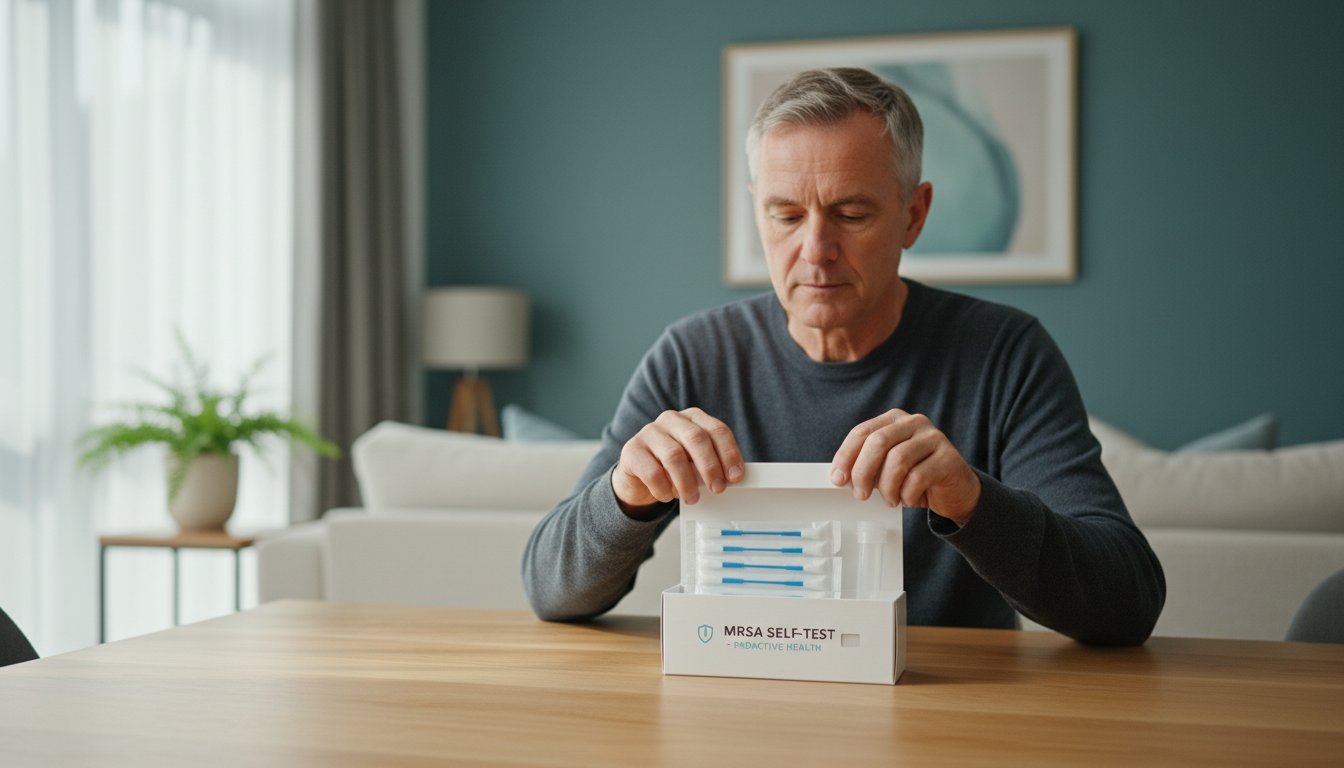
A single nasal swab is no longer enough to guarantee you’re clear of MRSA before a major procedure. If you’re preparing for an upcoming surgery, the fear of a last-minute cancellation due to an undetected “superbug” can be overwhelming. You’ve likely heard conflicting advice about where to swab, leading to confusion and anxiety during an already stressful time. It’s vital to understand that a comprehensive mrsa test nose groin axilla screen is the most reliable way to identify colonization that single-site tests often miss.
In this article, you’ll discover why these three specific body sites are critical for accurate detection and how you can perform a professional-grade screening from the comfort of your own home. We’ll explain the latest UK Health Security Agency (UKHSA) data published in February 2026 and why the NHS moved to a targeted screening approach in March 2026. You will learn the exact techniques to ensure your results are valid for the standard nine-month pre-operative window, giving you the peace of mind you need without the wait for a GP appointment.
Key Takeaways
- Learn why testing multiple body sites significantly increases the sensitivity and accuracy of your results compared to a single nasal swab.
- Understand the science behind why the mrsa test nose groin axilla sites are the primary reservoirs for colonization due to their unique micro-environments.
- Evaluate the differences between traditional culture methods and rapid PCR tests, which offer molecular detection in as little as 24 hours.
- Master the professional technique for swabbing each area correctly to ensure your samples meet clinical standards for laboratory analysis.
- Discover how to secure peace of mind before a medical procedure by testing discreetly from the comfort of your own home without a GP appointment.
What is the MRSA Triple-Site Screen (Nose, Groin, and Axilla)?
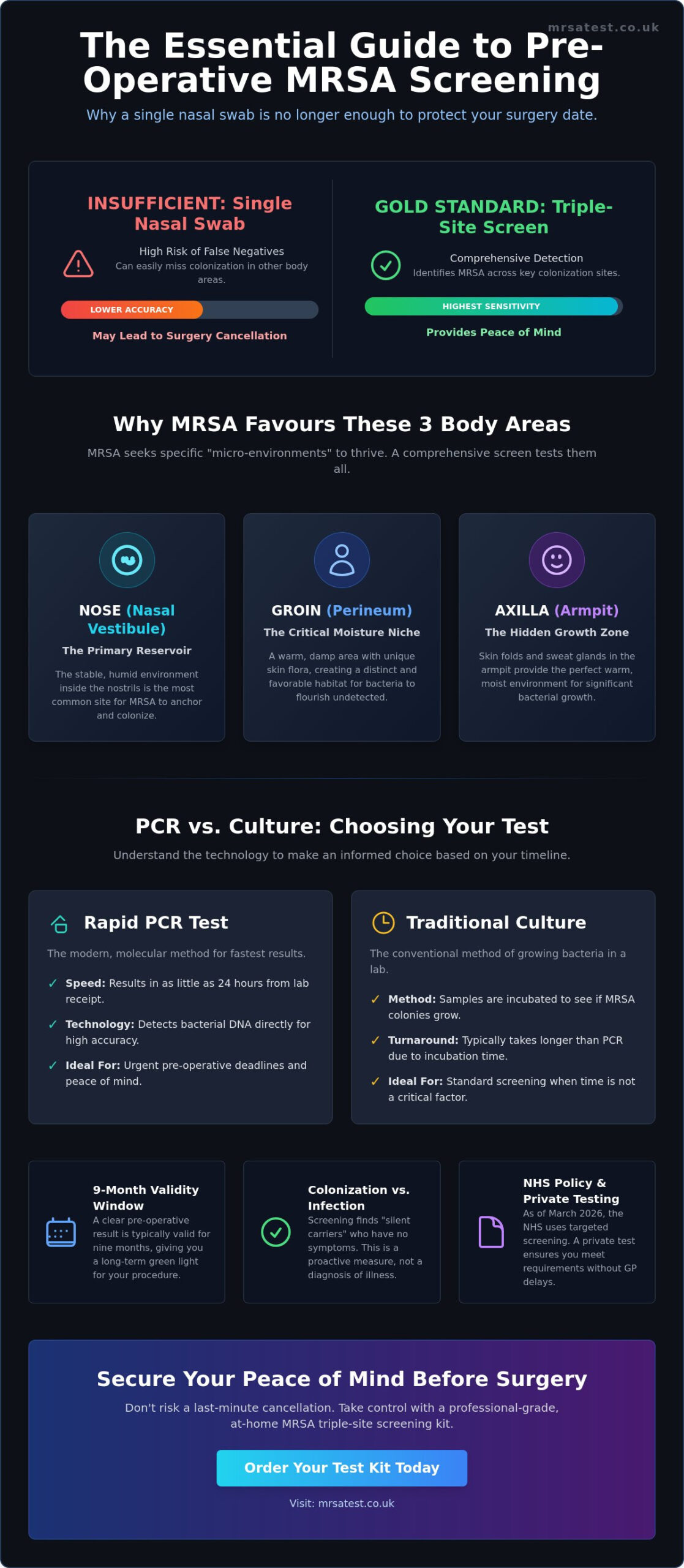
A triple-site screen is a comprehensive clinical protocol designed to identify if you are carrying Methicillin-resistant Staphylococcus aureus on your body. Unlike a basic test that might only look at the nostrils, a mrsa test nose groin axilla screen involves collecting samples from three distinct areas. This multi-site approach is widely considered the gold standard in clinical settings because it provides a much higher level of accuracy. By swabbing the nose, the groin, and the axilla (your armpit), clinicians can detect the bacteria even if it’s only present in one of these locations. Testing multiple sites increases the sensitivity of the screen, meaning it’s far less likely to return a false negative result.
The nose, groin, and axilla are the primary reservoirs for the bacteria. These areas provide the specific conditions that Staphylococcus aureus prefers to thrive in. While many basic explainers focus solely on the nose or throat, modern protocols emphasize the axilla because the skin folds in the armpit create a warm, damp environment that facilitates bacterial growth. As of March 2026, the NHS has moved to a targeted screening policy for high-risk patients. This change, influenced by joint guidance from the Healthcare Infection Society, means that having a private, comprehensive screen is often the most efficient way to ensure you meet hospital requirements without delays.
The Importance of Pre-Operative Screening
Hospitals require these specific swabs before elective surgery to minimize the risk of surgical site infections. If you are a carrier, the bacteria can enter the body through a surgical incision, leading to serious complications. A clear result provides the surgical team with the confidence to proceed. If you are preparing for surgery, remember that a screening result is typically valid for nine months, provided you haven’t been admitted to a hospital in the meantime. Getting your mrsa test nose groin axilla completed early helps avoid the stress of a last-minute cancellation.
Colonization vs. Infection
It’s vital to understand the difference between being colonized and having an active infection. What is MRSA? In the context of a screen, we are looking for colonization. This means you carry the bacteria on your skin or in your nose but aren’t actually ill. You won’t have symptoms like a fever or a rash, which is why you can be a carrier without knowing it. A screening test is a proactive measure to find these “silent” carriers. In contrast, a diagnostic test is used by doctors when a patient already shows signs of an infection to determine the best course of treatment.
The Science of Colonization: Why MRSA Favours These Body Areas
The human body isn’t a uniform surface; it’s a collection of diverse biological “micro-environments.” Bacteria like MRSA don’t just settle anywhere. They actively seek out specific niches that provide the warmth, moisture, and protection they need to survive. This biological preference is the reason why a comprehensive mrsa test nose groin axilla is necessary for an accurate result. If you only swab one area, you risk missing colonies that are thriving in another. Bacteria are also highly mobile. They move between these sites through simple skin-to-skin contact or by hitching a ride on shared items like towels and clothing.
The Nasal Vestibule: The Primary Reservoir
The nasal vestibule is the most common site for MRSA carriage. This area is the very front part of the nostril, lined with skin and tiny hairs that act as a filter. It’s a stable, humid environment that allows Staphylococcus aureus to anchor itself firmly. Because it’s the primary “hub” for colonization, every professional screening protocol begins here. Knowing how to perform a MRSA screening test correctly in the nostrils is the first step toward a reliable result. Without a proper nasal sample, the sensitivity of the entire screen drops significantly.
Groin and Axilla: The Moisture Niches
While the nose is the main reservoir, the groin and axilla (armpit) are critical “moisture niches.” These areas are rich in sweat glands and are often covered by clothing, creating a warm, damp environment where bacteria flourish. The skin flora in the groin is distinct from other body parts, offering a unique habitat that MRSA frequently exploits. In persistent carriers, the bacteria might even disappear from the nose temporarily while remaining active in these skin folds. Skipping these sites during a mrsa test nose groin axilla is a common mistake that leads to “false negative” results. This happens when the bacteria are present on the body but aren’t detected because the swab didn’t touch the right moisture-rich zone.
Understanding these biological “hiding spots” helps you appreciate why clinical protocols are so specific about where to swab. By targeting the nose, groin, and axilla, you’re looking in the three places where the bacteria are most likely to be found. If you want to ensure your pre-operative preparations are as thorough as possible, you can order a professional-grade home kit to complete your screening with total clinical accuracy and discretion.
PCR vs. Culture: Choosing the Right Test for Your Timeline
Once you’ve collected your samples, the next step involves laboratory analysis to confirm whether MRSA is present. There are two primary methods used for a mrsa test nose groin axilla screen: the traditional Culture test and the modern PCR rapid test. Both methods are highly accurate, but they serve different needs based on how quickly you require your results. At mrsatest.co.uk, we provide both options so you can choose the service that best fits your surgical timeline or personal peace of mind.
The standard Culture test is the traditional method for routine screening. It involves placing your samples onto a special growth medium to see if bacteria develop over 48 to 72 hours. While this process is reliable and cost-effective, the waiting period can be a source of anxiety if your hospital admission is approaching quickly. For those who need answers faster, the PCR method offers a significant speed advantage. Private clinics currently offer rapid PCR tests with a one-day turnaround, which is essential for meeting tight pre-operative deadlines.
When to Choose a Rapid PCR Test
If your surgery is scheduled in less than a week, a Rapid PCR Kit is the most appropriate choice. This method uses molecular detection, also known as Nucleic Acid Technique (NAT), to identify the specific DNA of the MRSA bacteria. Because the lab doesn’t need to wait for the bacteria to grow, results are typically available within 24 hours of the sample reaching the facility. It’s an efficient, high-tech solution for patients who cannot afford the delays associated with traditional lab cultures.
The Standard Culture Screen
The standard Culture screen remains the “gold standard” for routine checks and non-urgent screenings. It’s the ideal choice if you are testing several weeks or months before a procedure. The laboratory team carefully monitors the samples to confirm the presence of colonization, providing a definitive answer that meets standard UK hospital protocols. Since a screening result is generally valid for nine months, testing early with a culture screen is a proactive way to manage your health logistics without the pressure of a looming deadline. Whether you choose PCR or Culture, performing a mrsa test nose groin axilla ensures that no potential colonization site is overlooked.
Step-by-Step Guide: How to Swab Your Nose, Groin, and Axilla
Performing a mrsa test nose groin axilla at home is a straightforward process, but it requires clinical attention to detail to ensure the results are accurate. Before you begin, preparation is essential. Start by thoroughly washing your hands with soap and water. This prevents external bacteria from your fingers from contaminating the samples. Clear a clean, flat surface to set out the components of your discreet home test kit. It’s vital to avoid touching the cotton tip of the swab or the rim of the transport tube. Even a small amount of contact with your skin or a household surface can introduce unrelated microbes, potentially leading to an inconclusive result.
There is a common debate regarding “One Swab vs. Three Swabs.” While some basic protocols use a single swab for multiple areas, our professional-grade kits provide specific swabs for each site. This approach is superior for two reasons. First, it prevents cross-contamination between body sites. Second, it allows the laboratory to pinpoint exactly where colonization is occurring. If you are a carrier, knowing whether the bacteria is in your nose or your groin helps determine the correct decolonization treatment. Using separate swabs for each area ensures your screening meets the highest clinical standards used in UK hospitals as of 2026.
Correct Swabbing Technique for Each Site
For the nose, gently insert the swab into the anterior nares, which is the very front part of the nostril. Rotate the swab five times against the inner wall to collect a sufficient sample. When swabbing the axilla, focus on the center of the armpit. Use firm but comfortable pressure to ensure the swab makes good contact with the skin surface. For the groin, ensure the swab touches the skin crease where the leg meets the torso. This moisture-rich area is a primary niche for bacterial growth, so thorough contact is necessary for an accurate screen.
Labelling and Dispatching Your Kit
Accuracy doesn’t end with the swabbing. You must match the labels provided in your kit to the correct body site. For example, the label marked “Groin” must be placed on the tube containing the sample from that specific area. Once labelled and sealed, place your samples into the protective packaging. Use the included prepaid return envelope for tracked delivery to our UKAS-accredited laboratory. You can track your sample’s journey online, giving you peace of mind that your test is being handled by experts. To begin your screening process today, you can order your comprehensive MRSA test kit online and receive it in discreet packaging.
Why Choose a Private MRSA Test from mrsatest.co.uk?
Choosing a private service offers a level of convenience and speed that isn’t always available through public health routes. You can test for MRSA from the comfort of your own home, bypassing the need for a GP appointment or a visit to a crowded clinic. This is particularly beneficial for those with busy schedules or those who feel anxious about medical environments. A private mrsa test nose groin axilla screen allows you to take control of your pre-operative preparation on your own terms. All orders are handled with complete confidentiality and sent in discreet packaging, ensuring your medical information remains private.
Our service prioritizes efficiency without compromising on clinical standards. Once your sample reaches us, results are delivered via a secure online portal. This process is often faster than internal hospital processing, which is crucial when you’re working toward a strict surgical deadline. Knowing your status before you even arrive at the hospital provides immense peace of mind. It removes the uncertainty that often leads to surgery cancellations, allowing you to focus entirely on your recovery. Since the NHS moved to a targeted screening approach in March 2026, many patients find that private testing is the most reliable way to ensure they’ve been screened before elective procedures.
Our UK-Based Accredited Laboratory
Accuracy is our top priority. We partner exclusively with leading UK laboratories that hold UKAS accreditation. This accreditation is a formal recognition that a facility meets the highest international standards for medical testing accuracy and reliability. By using a 100% UK-Based laboratory, we ensure that your samples are handled by experts who understand current UK health protocols. Clinical-grade results are essential for hospital acceptance, and our partnership ensures your data is both valid and trusted by medical professionals. For more information on how these services work, you can explore our At-Home Test Kits UK guide.
Reducing Your Risk of Hospital-Acquired Infections
The primary goal of screening is safety. Identifying colonization early gives you the opportunity to undergo decolonization treatment before your procedure. This usually involves simple antiseptic body washes and nasal ointments to clear the bacteria from your skin. Proactive screening plays a vital role in preventing hospital-acquired infections (HAIs), which can significantly complicate post-surgical healing. By completing a mrsa test nose groin axilla screen now, you’re taking a definitive step toward a safer surgical outcome. Don’t leave your health to chance. Order your MRSA test kit today and secure your peace of mind.
Secure Your Surgical Success with Accurate Screening
You now understand why a comprehensive mrsa test nose groin axilla screen is the most reliable way to ensure you’re prepared for your upcoming procedure. By targeting these three specific reservoirs, you eliminate the guesswork and significantly reduce the risk of undetected colonization. This proactive approach doesn’t just protect your health; it ensures your surgical timeline remains on track without the threat of a last-minute cancellation.
Our service is designed to provide you with clinical-grade results from the comfort of your own home. Every sample is processed by a UKAS-accredited UK laboratory, ensuring your data is trusted and accurate. We prioritize your privacy with a discreet and confidential service, delivering results in as little as 24 hours for urgent pre-op needs. Take the next step toward a safe and successful recovery today.
Order Your MRSA Home Test Kit Now and proceed with total confidence.
Frequently Asked Questions
Do I need a separate swab for my nose, groin, and axilla?
Yes, you should use a separate swab for each body site to ensure the highest level of clinical accuracy. Using one swab for multiple areas can lead to cross-contamination or an inconclusive result. Our kits provide three distinct swabs to facilitate a comprehensive mrsa test nose groin axilla screen, which allows the laboratory to identify exactly where the bacteria are residing on your body.
How long does it take to get MRSA test results from a home kit?
Results are typically available within 24 to 72 hours once our laboratory receives your samples. If you choose the MRSA PCR rapid test, molecular detection allows for a 24-hour turnaround. Standard culture tests, which involve growing the bacteria in a controlled environment to confirm colonization, usually take between 48 and 72 hours to provide a definitive result for your records.
What happens if my MRSA test comes back positive?
A positive result means you are colonized with the bacteria, but it doesn’t mean you are currently ill or infected. If you test positive before a medical procedure, your surgical team will likely prescribe a decolonization treatment. This usually consists of a five-day course of antiseptic body wash and nasal ointment to clear the bacteria and minimize the risk of a surgical site infection.
Can I take an MRSA test while I am on antibiotics?
You should ideally wait until you have finished any course of antibiotics before performing your screening. Antibiotics can temporarily suppress the growth of the bacteria, which might lead to a false negative result. To ensure the most accurate mrsa test nose groin axilla result, it is best to perform the swabs at least 48 hours after your last dose of medication.
Is the home MRSA test as accurate as the one done in a hospital?
Yes, a home test is just as accurate as a hospital screen when processed by a UKAS-accredited facility. We use clinical-grade charcoal swabs and the same laboratory methods employed by the NHS. As of March 2026, many patients prefer home testing for its convenience and the ability to get reliable results without waiting for a GP appointment or hospital visit.
Do I need to swab my throat as well as my nose and groin?
A throat swab is not always necessary because the nose, groin, and axilla are the primary reservoirs for colonization. While some specific hospital protocols might occasionally request a throat sample, swabbing the nose and at least one other skin site is the current clinical standard. Our kits focus on the three most critical areas to provide a high level of sensitivity.
How should I store the swabs before I post them back to the lab?
Store your completed swabs at room temperature and return them to the laboratory as soon as possible. Avoid placing the samples in direct sunlight or near a heat source, such as a radiator, as extreme temperatures can damage the sample. Using the provided prepaid tracked envelope ensures your samples reach our UK-based facility quickly, ideally within 24 hours of collection.
What is the difference between an MRSA culture and a PCR test?
The main difference lies in the laboratory method and the speed of the results. A culture test involves waiting for the bacteria to grow on a special medium, which takes up to three days. A PCR test uses molecular detection to find bacterial DNA, providing a result in just 24 hours. Both methods are highly reliable for detecting colonization before a planned hospital admission.
